
10 Snyk Alternatives for Secure Teams in 2026
 Reza Khosravi
Table of Contents
A scanner can report a vulnerability without telling you whether it affects a service, violates an approved design, or should block a pull request. That gap matters: research covering npm, PyPI, and RubyGems identified nearly 11,200 unique malicious packages in 2023, alongside more than 40,000 leaked or exposed development secrets across major package managers (dependency-management research). The challenge isn't just finding more issues. It's making security decisions that developers can act on and auditors can trace.
This guide compares 10 Snyk alternatives across SAST, SCA, infrastructure-as-code scanning, policy controls, and CI/CD workflow fit. It also considers the work behind adoption: tuning rules, integrating findings into code review, managing exceptions, and migrating repositories without leaving coverage gaps. Product capabilities and packaging vary, so confirm the exact features available for your intended plan and deployment.
A scanner evaluates code and dependencies; it doesn't automatically keep threat models current or connect an approved design decision to a later code change. For regulated and fast-moving teams, that distinction shapes the choice. The right tool should fit the engineering workflow and support evidence of what was reviewed, what was enforced, and why.
1. Semgrep
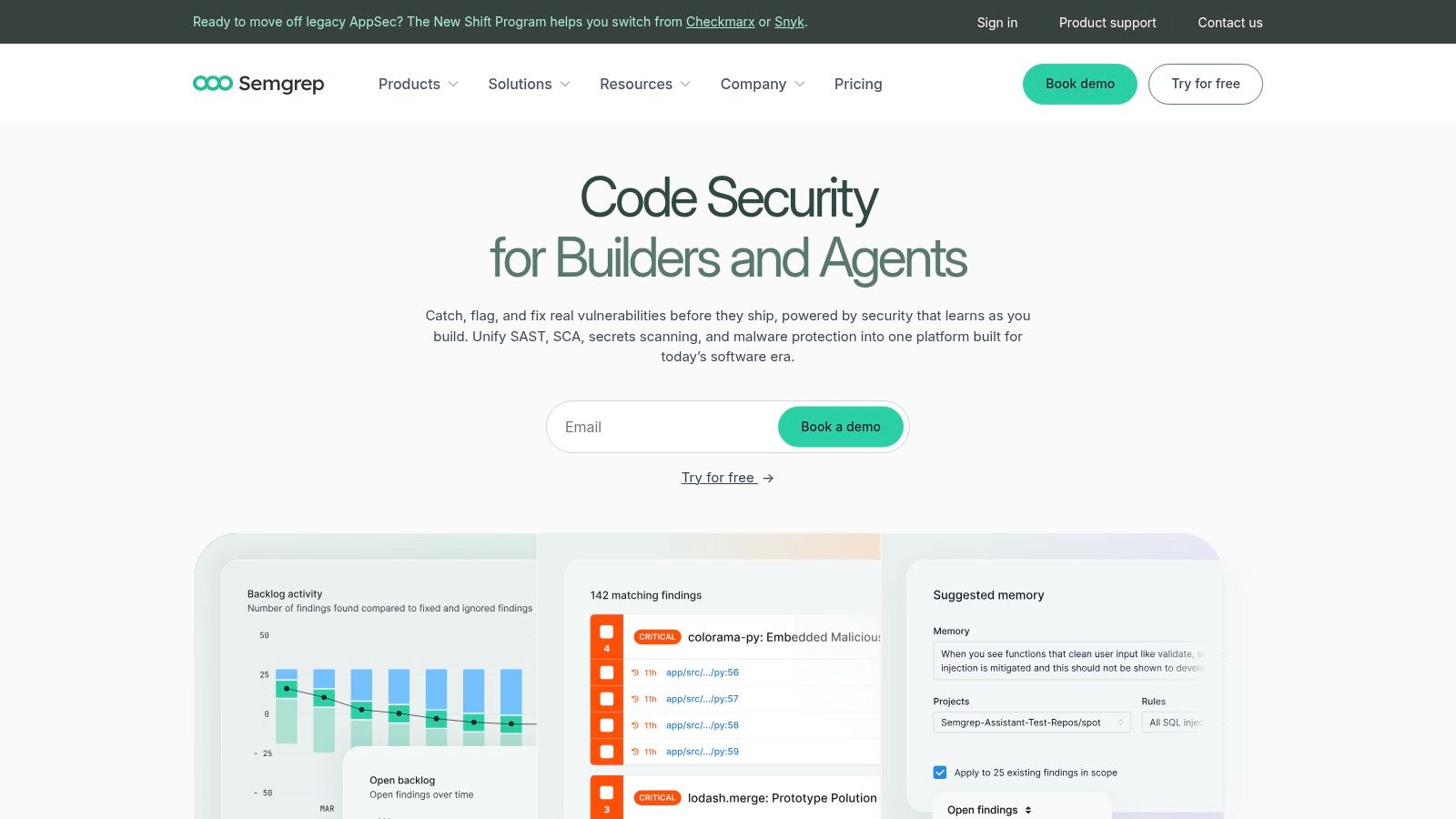
Semgrep is a strong candidate when the security team wants control over how proprietary code is checked. Its combination of static analysis, dependency analysis, and secrets detection can bring checks close to the change through IDE, CI/CD, and pull-request workflows. Custom rules are especially useful when a company needs to enforce internal coding standards that generic rules won't express.
What to validate in a pilot
Semgrep's flexibility is both its value and its operating cost. A security engineer can define organization-specific checks, but someone must maintain those rules, tune them against real code, and decide how findings affect merges. Cross-file analysis and dependency reachability can add useful context, but teams should test those capabilities on representative repositories rather than assume that every rule or product tier behaves the same way.
The developer experience depends on where the team puts feedback. IDE findings can help developers catch issues before committing, while pull-request comments make it easier to review changes in context. Neither workflow succeeds automatically: overly broad rules can add noise, and rules that aren't mapped to ownership or policy may turn into another queue for AppSec to manage.
Practical rule: Start with a small set of high-confidence rules tied to explicit policies, then expand after teams trust the results.
Semgrep offers a free option and published entry pricing, but buyers should confirm which products and features their plan includes. Enterprise pricing and deployment details may require a vendor discussion. Visit Semgrep to assess the current product options.
2. GitHub Code Security and Secret Protection
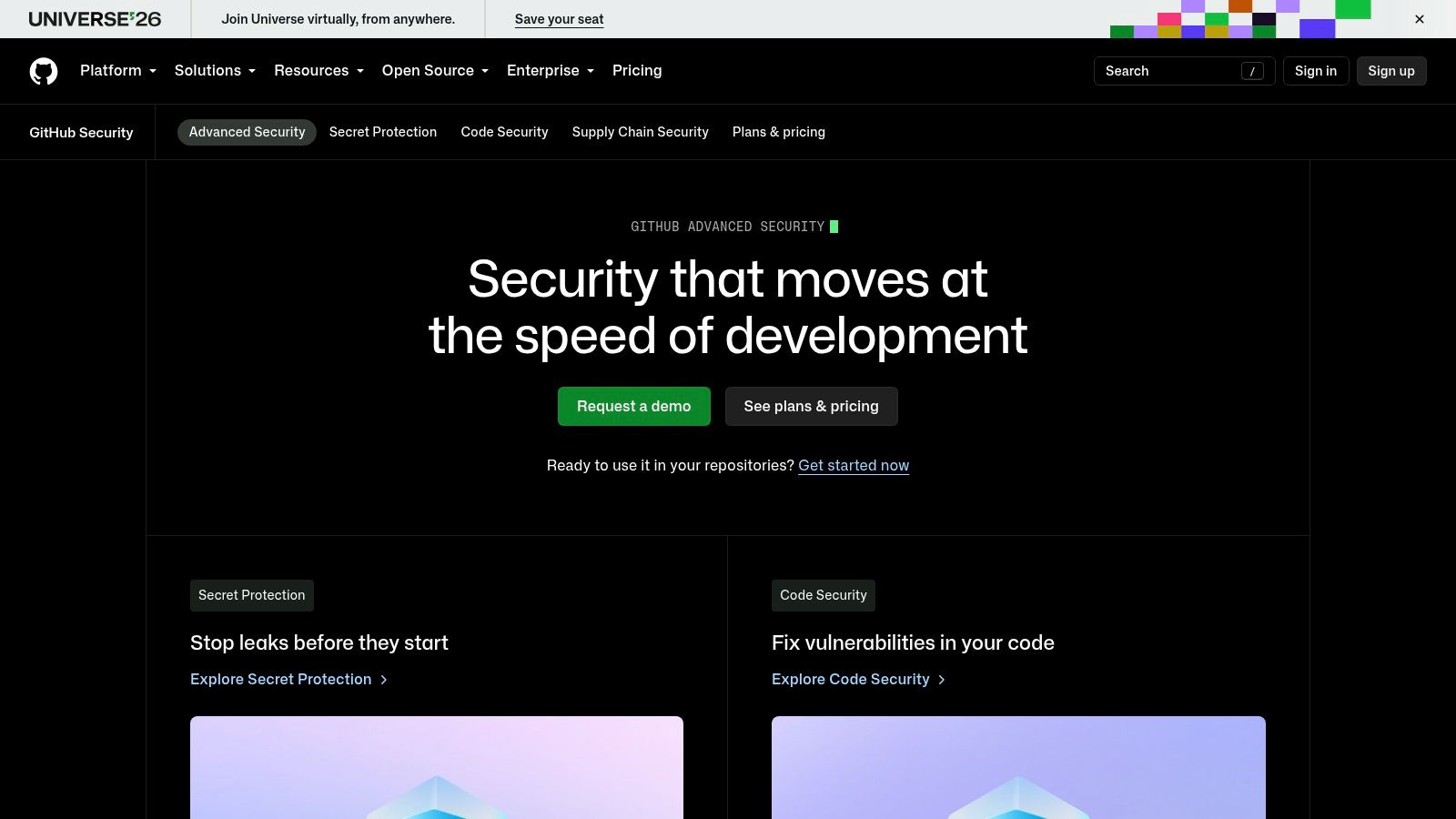
For teams already working in GitHub, native security features can reduce context switching. Code Security includes CodeQL-based code analysis and dependency-related workflows, while Secret Protection focuses on secret scanning and push protection. Findings surfaced alongside pull requests can make remediation part of the code review rather than a separate AppSec task.
Native integration has a boundary
The main trade-off is platform fit. Organizations standardized on GitHub can benefit from a closer connection between repositories, review, and security findings. Teams using multiple source-control platforms should weigh that convenience against the effort of maintaining consistent policies across different environments.
CodeQL can support advanced static analysis, but detection alone doesn't decide whether a finding blocks a merge. Buyers should verify the capabilities included in each product, how dependency review fits into their process, and who owns triage and exceptions. Paid coverage for private repositories also needs to be considered during budgeting.
Teams reviewing GitHub controls alongside broader pipeline safeguards can also consider CI/CD pipeline security practices. That's a complementary question, not a substitute for validating GitHub's scanning and protection features.
Use a pilot to check whether alerts arrive at the right point in the pull-request lifecycle, whether reviewers can understand and resolve them, and whether policy decisions leave an audit trail. See GitHub Code Security and Secret Protection for current product details.
3. Checkmarx One
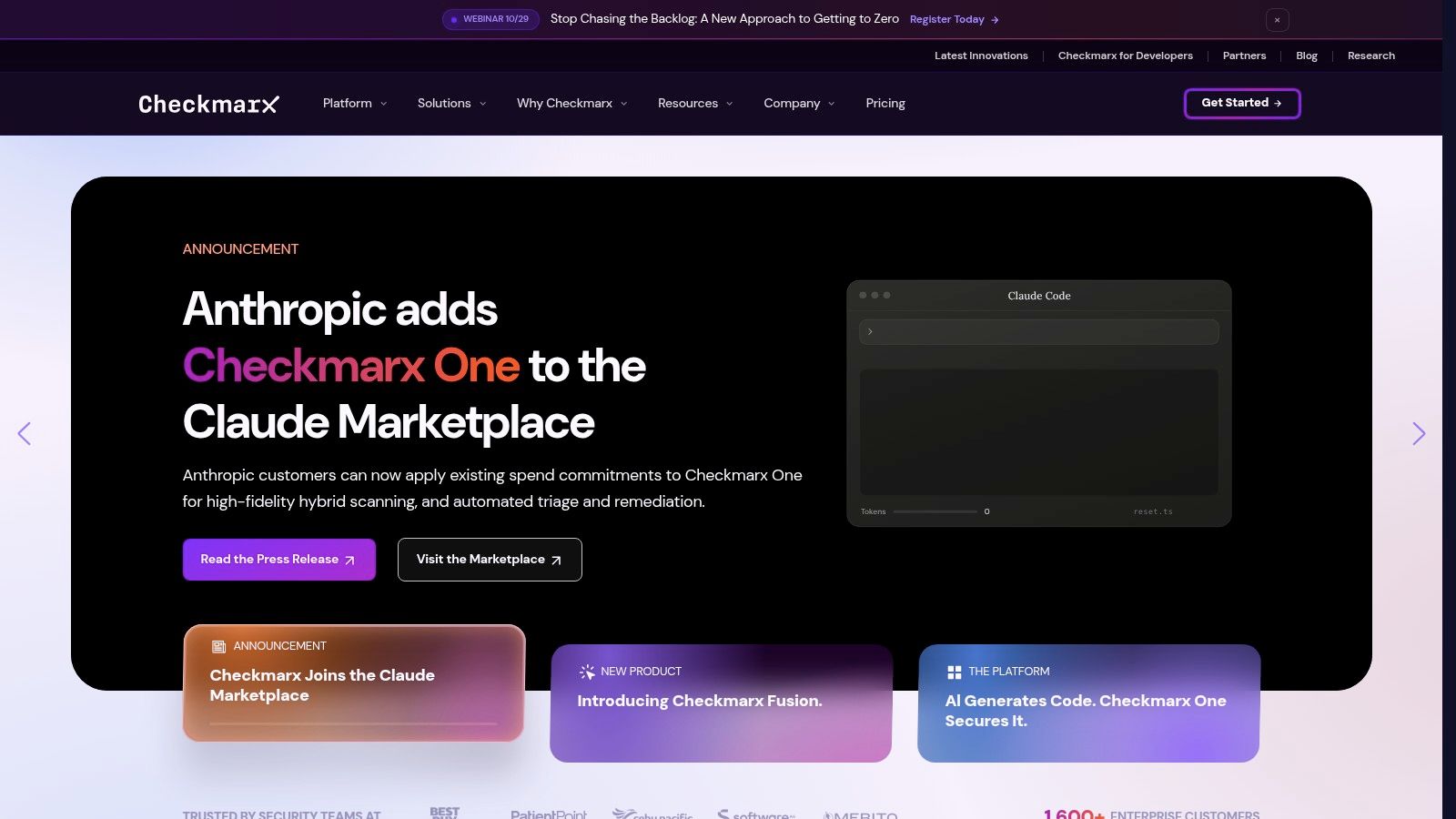
Checkmarx One is worth evaluating when an organization wants a configurable enterprise AppSec platform rather than a single-purpose code scanner. Its portfolio can combine SAST, SCA, DAST, API security, infrastructure-as-code, container, and secrets scanning. Centralized risk management can help teams review findings from multiple scanners in one place, including some external results.
Broad coverage requires deliberate rollout
The appeal is breadth. A team with separate scanners for different testing needs may be able to consolidate parts of its workflow, while modular packaging allows buyers to evaluate coverage against particular requirements. Supply-chain features such as dependency analysis, SBOM reporting, and policy controls may also matter to organizations that need formal records of software components.
But breadth creates implementation work. More modules mean more decisions about onboarding, policy configuration, finding ownership, and integration with developer workflows. Self-hosted and SaaS options may address different data-handling needs, but the deployment model should be assessed alongside operational overhead, not as a checkbox.
A demo isn't enough to establish signal quality. Run representative repositories through the selected engines, then check which findings surface in pull requests, how teams suppress or remediate them, and what evidence remains for audit. Confirm the relevant language coverage and module boundaries before treating the platform as a consolidated replacement.
Checkmarx pricing is customized around the selected modules, deployment, and developers in scope. A vendor conversation is part of the evaluation, so define the required use cases and integration expectations before requesting a quote. Review Checkmarx One for current platform information.
4. Mend.io
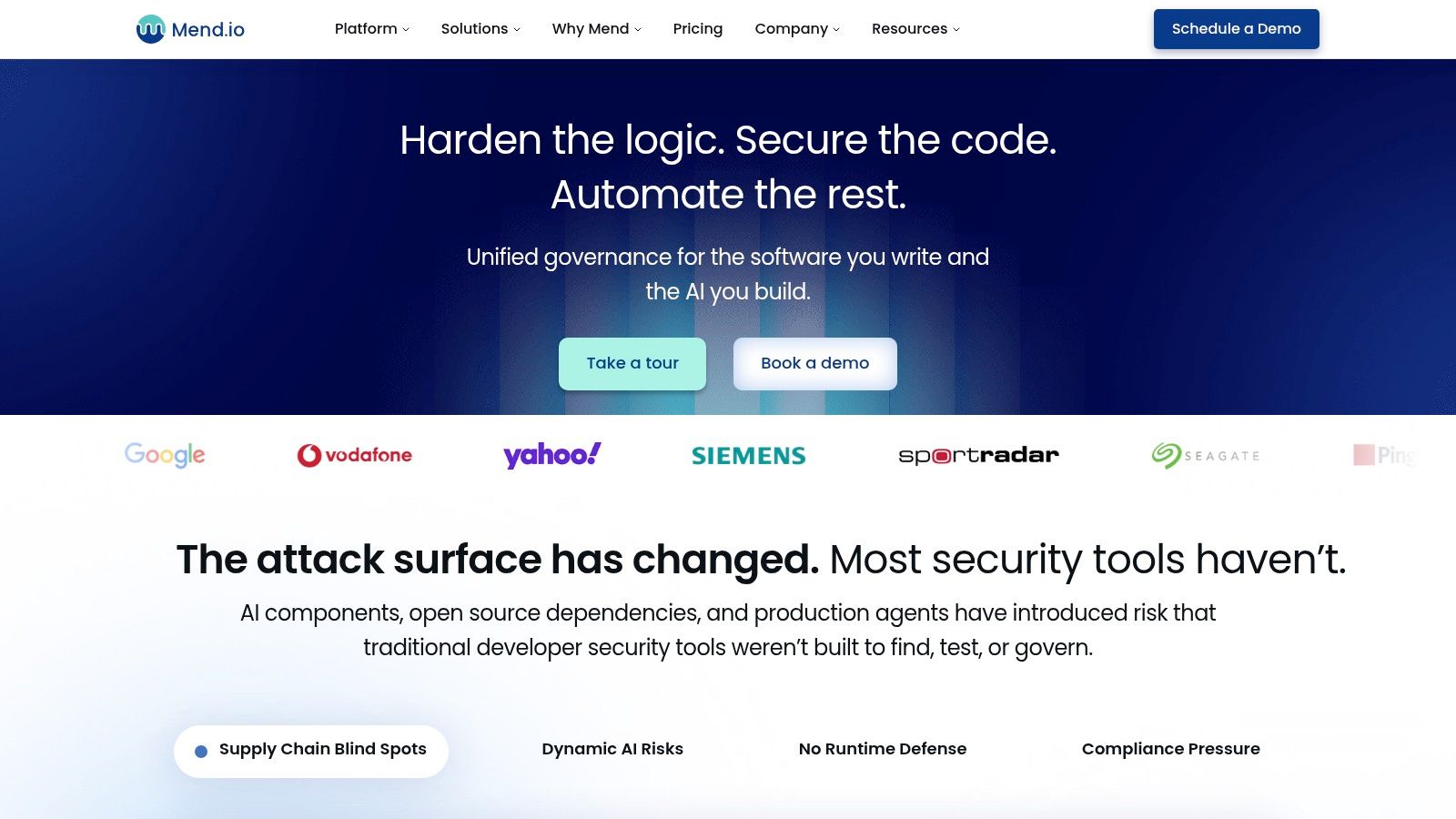
Mend is a practical option for teams whose dependency program needs to connect findings with ongoing maintenance. Mend AppSec brings together SAST, open-source dependency analysis, and container scanning, while Mend Renovate automates dependency updates. That pairing can help teams move from discovering an outdated or vulnerable package to managing an update in the repository.
Separate the capabilities before buying
Mend's product family also includes AI-related capabilities for fix suggestions and securing AI-generated code. Buyers should distinguish which functions are part of Mend AppSec and which belong to separate offerings. A platform name can make adjacent features look bundled when they may require separate scope, licensing, or evaluation.
The operational test is whether the tool helps teams prioritize dependency work and complete updates without creating a disconnected queue. Check how findings map to repositories and owners, how proposed dependency changes are reviewed, and whether the organization can retain evidence of remediation. Teams should also test SAST and container scanning against their own applications rather than assume that strength in SCA predicts fit across every scan type.
For teams assessing dependency processes, this overview of software composition analysis offers relevant context. SCA remains one part of the decision: it identifies component risk, but it doesn't itself keep design assumptions aligned with code changes.
Mend publishes pricing ceilings for some offerings, but those figures aren't a substitute for confirming the actual package and quote. Teams that need continuous threat modeling or design-review automation may need complementary capabilities. Visit Mend.io to check the current product and pricing details.
5. Aikido Security
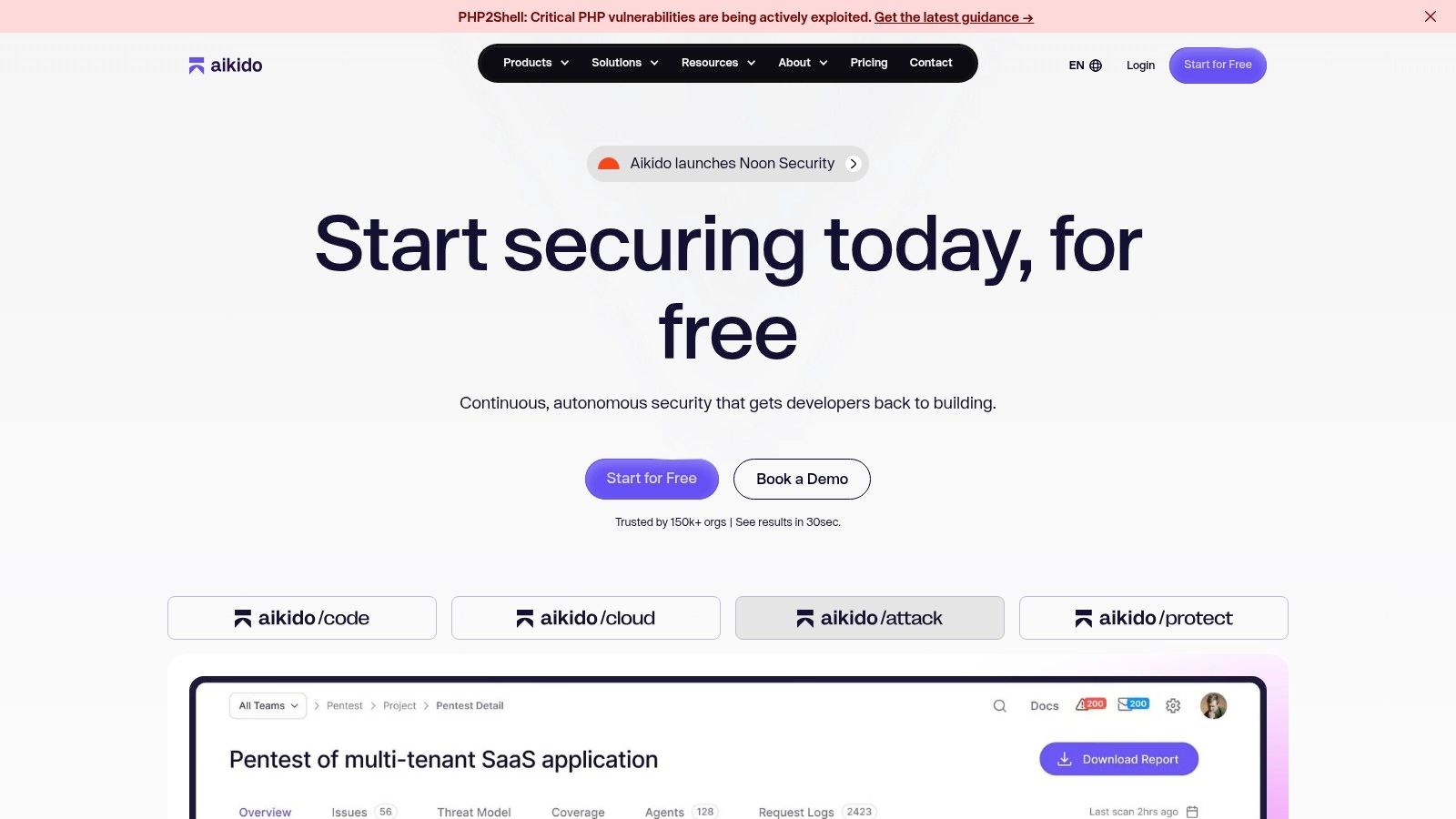
Aikido brings several application-security checks into a developer-oriented platform, including SAST, SCA, secrets detection, and cloud or infrastructure checks. For teams tired of switching between point tools, a consolidated interface can make it easier to review findings and route remediation. IDE, CI, and pull-request workflows bring security feedback closer to development, with AI-assisted fixes available as part of the product experience.
Test the plan limits against actual usage
Aikido offers a free Developer plan and published paid plans, while enterprise pricing is customized. The important procurement detail is that scan coverage, repository limits, and features vary by plan. Check the current plan matrix against the organization's languages, repositories, integrations, and reporting needs rather than evaluating only the product's headline coverage.
Some paid-plan capabilities include pull-request security review, issue-tracker integrations, and reports. Enterprise options may include on-prem scanning and compliance-related features. Those capabilities can help with governance, but they don't guarantee that every scanner will meet a team's accuracy or policy requirements.
A single interface can reduce tool switching, but it can't replace a clear owner for every finding and exception.
Use a pilot to compare signal quality across code, dependencies, secrets, and infrastructure checks. Track whether developers can resolve issues in the tools they already use, and whether security teams can enforce consistent policy without creating unmanageable review queues. Buyers with specific deployment or governance requirements should resolve those details with the vendor early.
Aikido is best judged by its actual configuration, not by assumptions about what “all-in-one” means. See Aikido Security for its current offerings and plan limits.
6. GitLab application security
GitLab application security makes the most sense for teams already using GitLab repositories and CI/CD. SAST and dependency scanning connect to the platform's pipeline and merge-request workflows, giving developers a place to review security findings alongside code changes. Organizations operating GitLab themselves may also value the available self-managed deployment options for documented security features.
Tier and workflow matter
Feature availability varies by tier. Dependency scanning is listed for Ultimate, while some SAST functionality is available across tiers, so buyers should check the current feature matrix before assuming an existing GitLab subscription covers a desired workflow. That distinction can change the business case if the goal is to replace a separate scanner.
The workflow benefit is straightforward: findings can appear where teams review changes and run pipelines. But teams still need to determine which findings should block a merge, how exceptions are documented, and whether scanning covers the languages and repositories that matter. A clean integration won't compensate for inadequate scanner fit or a policy that developers can't follow.
GitLab supports SaaS, self-managed, and dedicated deployment options for documented security features. Validate the chosen deployment against integration, data-handling, and operational requirements, then test with repositories that reflect the organization's actual build patterns. Review GitLab application security for the current feature and deployment details.
7. Endor Labs
Endor Labs focuses on application and software-supply-chain security. Its offerings include SCA, SAST, secrets, container analysis, malicious-package detection, and SBOM workflows, with reachability-based prioritization intended to help teams investigate dependency risk in context. Features for AI coding agents also make it relevant to organizations setting security expectations around assisted development.
Reachability is useful only when it changes decisions
Dependency scanners can produce findings that require teams to work out whether the vulnerable component is relevant to the application. Reachability analysis can help focus that investigation, but buyers should ask how results are produced, what evidence supports prioritization, and how those decisions translate into remediation policy. The question isn't just whether a finding is marked reachable; it's whether the team can act on that context reliably.
Endor Labs offers a free developer tier, while team pricing depends on product and contributor scope. The free tier has limits, including the absence of a UI, policies, and scan history. Product packaging also matters: confirm whether SCA, code scanning, secrets, agent governance, SBOM, and VEX capabilities are included in the proposed configuration rather than assuming one subscription includes everything.
For regulated teams, test whether SBOM records and policy outcomes can be retained in the form needed for reviews. Then check how dependency findings move into ownership and remediation workflows. A local trial can establish whether analysis fits engineering practice, but it won't prove that enterprise governance is included.
Visit Endor Labs to review current product options and determine which features are available in each plan.
8. SonarQube
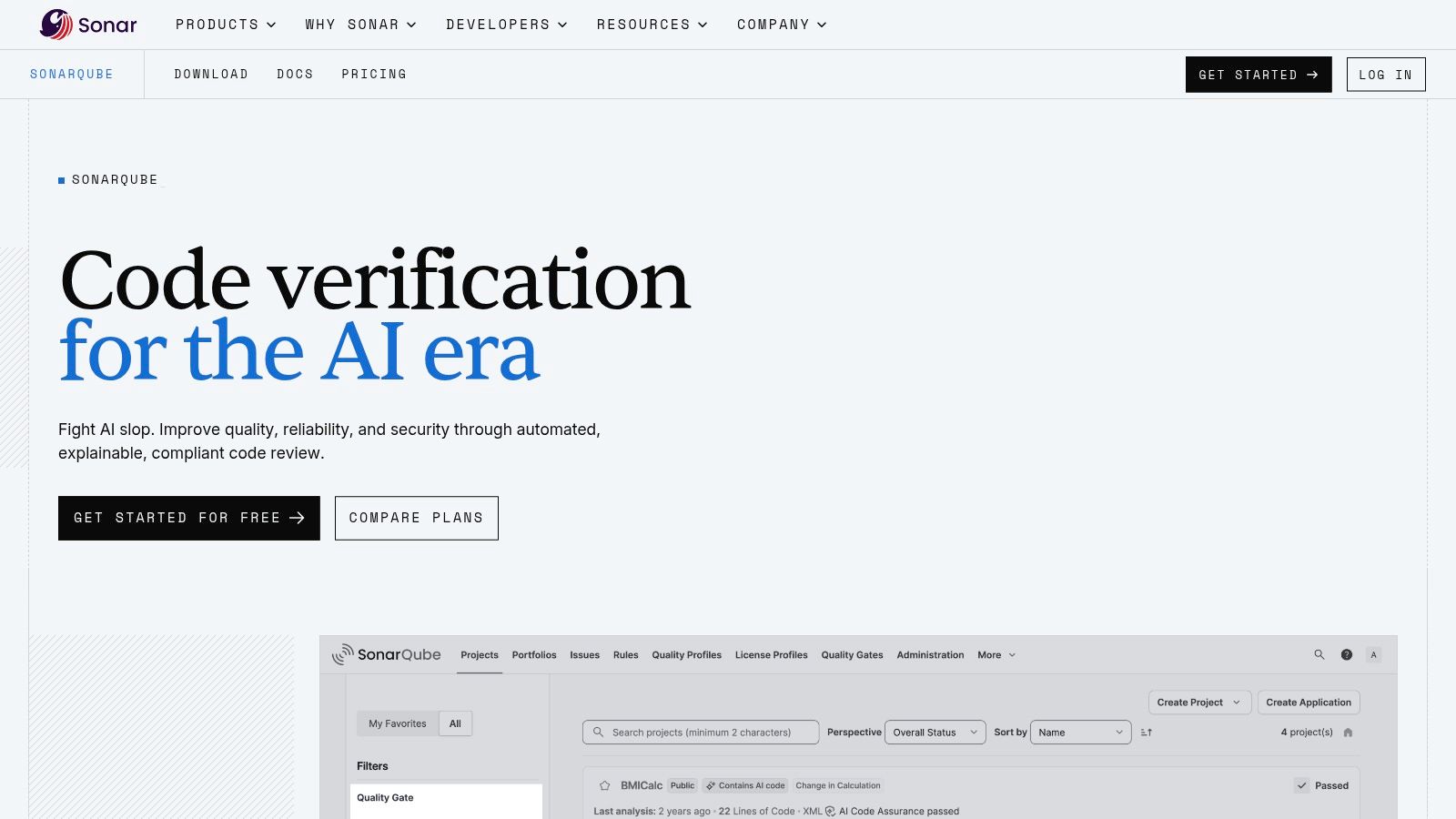
SonarQube is a natural contender when engineering teams already use code-quality analysis and want security findings in a familiar workflow. It combines code-quality checks with security analysis, including security hotspots, and offers IDE feedback through SonarQube for IDE. Eligible subscriptions add advanced security capabilities such as SAST and SCA, including vulnerability and license checks.
Confirm that security isn't an add-on assumption
SonarQube's blend of maintainability and security can help teams bring code review concerns into one process. The trade-off is that the organization must ensure security work doesn't become lost among quality and style findings. Agree on ownership, severity handling, and merge policy so that a security finding gets the attention it requires.
SCA isn't included in every plan. Teams should verify which subscription provides the security features they intend to use, and how pricing based on analyzed lines of code applies to their repositories. Cloud and self-managed options may suit different operational preferences, but each still needs to be evaluated against language coverage, integrations, and data requirements.
Teams working with Java can also review this guide to static code analysis for Java. Use representative code to test whether findings are understandable and actionable, and whether developers can resolve them from the IDE or pull request.
SonarQube offers a free tier for eligible private projects and a published Team starting price, but verify the current limits and whether SCA or other advanced features require a different subscription. Organizations needing broader secrets, container, or supply-chain coverage should assess complementary tools. See SonarQube for current product and pricing information.
9. Black Duck Polaris
Black Duck is a strong fit to evaluate when open-source governance, vulnerability management, and license compliance sit high on the AppSec agenda. Its SCA offering analyzes open-source components and software artifacts, while Polaris combines SCA with SAST and DAST engines. That makes the platform relevant to organizations seeking multiple testing types alongside component governance.
Make component governance operational
Black Duck's open-source focus can support teams that need to manage both security and licensing risk. The buyer should examine how component findings are reviewed, how license policies are applied, and what records are retained when a team approves an exception. For larger portfolios, the value of an inventory depends on whether owners can use it to make decisions and track remediation.
Polaris offers broader testing than a focused SCA deployment, but teams should still validate the fit of each engine separately. A combined platform doesn't guarantee consistent developer experience across scanning types. Test how results appear in the team's existing code-review and CI/CD process, and whether the platform supports the policy enforcement required for releases.
Pricing isn't presented as a straightforward self-serve package, so buyers should expect to discuss requirements with the vendor. Bring concrete use cases, repository patterns, and governance expectations to that conversation. If continuous threat modeling and automated design review are also requirements, plan for complementary tooling rather than expecting an SCA-centered product to provide those functions.
Review Black Duck to compare its focused SCA and Polaris options.
10. Veracode
Veracode offers an application-security platform that combines static analysis and SCA with broader testing and risk-management capabilities. Its documented workflows include static scans and component analysis, including a process in which a static analysis scan can also perform an SCA scan during prescan verification. That makes it worth assessing as a suite, not just as a code scanner.
Fit the scan into the delivery process
For a mature AppSec program, the main question is how Veracode's scanning and risk-management workflows align with existing build, deployment, and review practices. Test the scan process against real applications and pipelines. Pay attention to how findings get assigned, how remediation is verified, and whether developers receive feedback at a useful point in their workflow.
A broad platform may suit organizations that want multiple testing capabilities from one vendor, but it doesn't automatically replace every control around development. Scanner results don't create continuous threat models, connect design approvals to later code changes, or decide which policy violations should block a pull request. Those responsibilities need an explicit process and, where necessary, complementary tooling.
Pricing and package details aren't presented as simple public package prices on the referenced product pages. Request a quote that spells out the included modules, deployment assumptions, and relevant integrations. A demo should demonstrate the team's actual workflow rather than a generic scan.
See Veracode for platform details and to discuss the requirements that determine a suitable configuration.
Top 10 Snyk Alternatives: Feature Comparison
The right Snyk alternative depends on which scans your team needs, where findings should appear, and what controls must be enforced in CI/CD. The comparison below covers ten alternatives across SAST, SCA, IaC, policy-as-code, and workflow fit. Pricing is omitted because package details can vary by plan and configuration; confirm current terms directly with each vendor.
| Platform | Core focus | SAST, SCA, and IaC coverage | Policy and CI/CD fit | Best fit |
|---|---|---|---|---|
| Semgrep | Code, dependency, and secrets scanning | SAST, SCA, and secrets detection, with custom rules and reachability analysis | IDE, CI/CD, and pull-request integrations; configurable rules and policies | Teams that want customizable code and dependency checks within developer workflows |
| GitHub Code Security and Secret Protection | Code, dependency, and secret security | CodeQL analysis, dependency review, secret scanning, and push protection | Native integration with GitHub repositories, pull requests, and workflows; policy enforcement is strongest within the GitHub environment | Organizations already using GitHub that want security feedback alongside code review |
| Checkmarx One | Enterprise application-security testing | SAST, SCA, DAST, API, IaC, container, and secrets scanning | Modular coverage with centralized findings; available as SaaS or self-hosted, with CI/CD fit to assess against existing pipelines | Enterprises consolidating several AppSec testing capabilities |
| Mend.io | Code, open-source, and container security | SAST, SCA, and container scanning, with dependency updates through Renovate | Supports development and pipeline workflows; teams should verify policy controls and integrations for their environments | Teams prioritizing open-source risk and dependency maintenance |
| Aikido Security | Developer-oriented security checks | Code, dependency, secrets, cloud, and infrastructure checks | IDE, CI, and pull-request workflows, with an integrated interface and AI-assisted fixes | Teams seeking checks across application and infrastructure security in one platform |
| GitLab application security | Security scanning within a DevSecOps platform | SAST and dependency scanning integrated with repositories and pipelines | Findings appear in merge requests and CI/CD workflows; available capabilities depend on the GitLab tier | Teams standardized on GitLab that want security results near code review |
| Endor Labs | Application and software-supply-chain security | SCA, SAST, secrets, and container capabilities, with SBOM/VEX and AI-agent security options | Emphasizes dependency analysis and supply-chain controls; validate pipeline integrations and enforcement needs | Teams focused on dependency risk and software supply chains |
| SonarQube | Code quality and security analysis | Code analysis, with advanced plans adding SAST and SCA capabilities | IDE and pull-request feedback; assess IaC and policy-as-code requirements separately | Engineering teams that want code-quality checks alongside security analysis |
| Black Duck Polaris | Open-source risk, SCA, and license compliance | SCA-focused options; Polaris combines SAST, SCA, and DAST | Supports component and license governance; confirm IaC coverage and policy enforcement against team requirements | Organizations with formal software-component and license controls |
| Veracode | Application-security testing and program management | Static analysis, SCA, and broader application-testing workflows | Evaluate how scanning and findings management fit existing build, deployment, and review processes | Organizations assessing a multi-capability AppSec vendor |
A scanner's coverage does not establish whether a design decision remains valid as code changes. DevArmor addresses that separate workflow with continuous threat modeling, security design reviews, and policy-as-code enforcement across planning, IDEs, pull requests, and deployment. For regulated teams, the relevant comparison is how that design context and PR enforcement complement scanning, and whether the resulting records support audit needs.
Pick a Scanner, Then Enforce Design
A scanner comparison is useful only if it ends in a decision about who acts on findings, what controls apply, and what evidence the organization retains. The 2025 shift-left survey found that 35% of respondents cited false positives as a leading challenge, 31% reported difficulty integrating tools into developer workflows, and 25% said developers were overwhelmed by vulnerability volume (shift-left security survey). That's why a feature checklist isn't enough. Test whether a tool improves the work around findings, not just whether it can run another scan.
Shortlist two or three platforms against real repositories and representative pipelines. Include the application languages, dependency managers, infrastructure definitions, and pull-request patterns the team uses daily. Measure whether findings arrive in the right workflow, whether developers can understand the suggested action, and whether policy owners can distinguish a permitted exception from an unresolved risk.
Check more than scan coverage
Before selecting a tool, confirm:
- SAST and SCA fit: Validate language and ecosystem coverage, dependency reachability, and how teams manage vulnerability and license findings.
- IaC and policy controls: Test whether infrastructure checks reflect internal requirements and whether pull-request or CI/CD controls can enforce them.
- Workflow integration: Check the experience in the IDE, source control, issue tracker, and build pipeline. A finding that developers rarely see won't improve remediation.
- Audit evidence: Verify that the organization can retain scan results, policy decisions, exceptions, and remediation records in a form it can review.
- Migration effort: Decide how existing rules, suppression decisions, and open findings will be handled. Run the old and new process together long enough to identify gaps without creating unmanaged duplicate queues.
For regulated organizations, security work also starts before a scanner runs. Product teams need a way to keep threat models and design decisions aligned with the tickets, repositories, and services that change over time. A platform that supports continuous threat modeling and policy enforcement can complement SAST and SCA by connecting approved controls to code review, rather than leaving design intent in a document that gradually becomes stale.
DevArmor is designed for that complementary role. It generates and updates threat models from artifacts such as tickets, design documents, repositories, and service metadata, and can surface security design reviews in workflow tools. Its Policy-as-Code controls can run on pull requests, including optional merge blocking and traceable review outcomes; implementation verification can connect approved design decisions to code changes and deployments. Those capabilities don't replace the scanner comparison. They address a different operational gap: keeping security context and policy decisions connected to delivery work.
The right choice depends on the organization's tools, deployment needs, governance model, and capacity to maintain rules. That's similar to matching platforms to IT operating models: adoption works best when the platform fits how teams already operate, while still making necessary controls enforceable. Choose the scanner that fits the actual code and pipeline, then layer the design and enforcement controls needed to make security decisions durable and auditable.
DevArmor provides continuous threat modeling, security design reviews, and Policy-as-Code enforcement across the software delivery lifecycle, including pull-request checks and optional merge blocking. If you're comparing Snyk alternatives for regulated or fast-moving teams, visit DevArmor to see how living security context can complement code and dependency scanning.
Table of Contents
Subscribe


