
10 Snyk Alternative Tools for Regulated Teams in 2026
 Reza Khosravi
Table of Contents
A platform team enables scanning across forty repositories on Monday. By Friday, several thousand findings have accumulated, many in transitive dependencies that service owners do not recognize or want to patch. Developers mute notifications, while AppSec triages by severity, and the backlog keeps growing.
That pattern often pushes teams to look for Snyk alternatives. One trigger is cost and seat growth: adding contributors and repositories can make renewal harder to justify. Another is scanner noise, which can outpace triage capacity. Finding issues is not the same as closing the right ones. Compliance is a third concern. Auditors may ask for design evidence, approvals, and proof that controls remained in place through implementation, not just scan output.
The stakes are reflected in Verizon's 2025 Data Breach Investigations Report findings, which analyzed more than 22,000 security incidents and 12,195 confirmed breaches. The report found that vulnerability exploitation accounted for 20% of breaches, up 34% year over year. Finding vulnerabilities matters, and so does governing how they are fixed.
This list covers ten tools, organized around the job a team needs to replace: consolidating AppSec scanners, scanning code with developer-focused tools, governing software supply chains, or checking dependencies alone. Each option has gaps, because no single tool replaces every Snyk module. Compare against the coverage you use today, not the longest feature checklist. For regulated teams moving quickly, also ask whether the tool enforces policy during design, before code reaches implementation.
1. Aikido Security
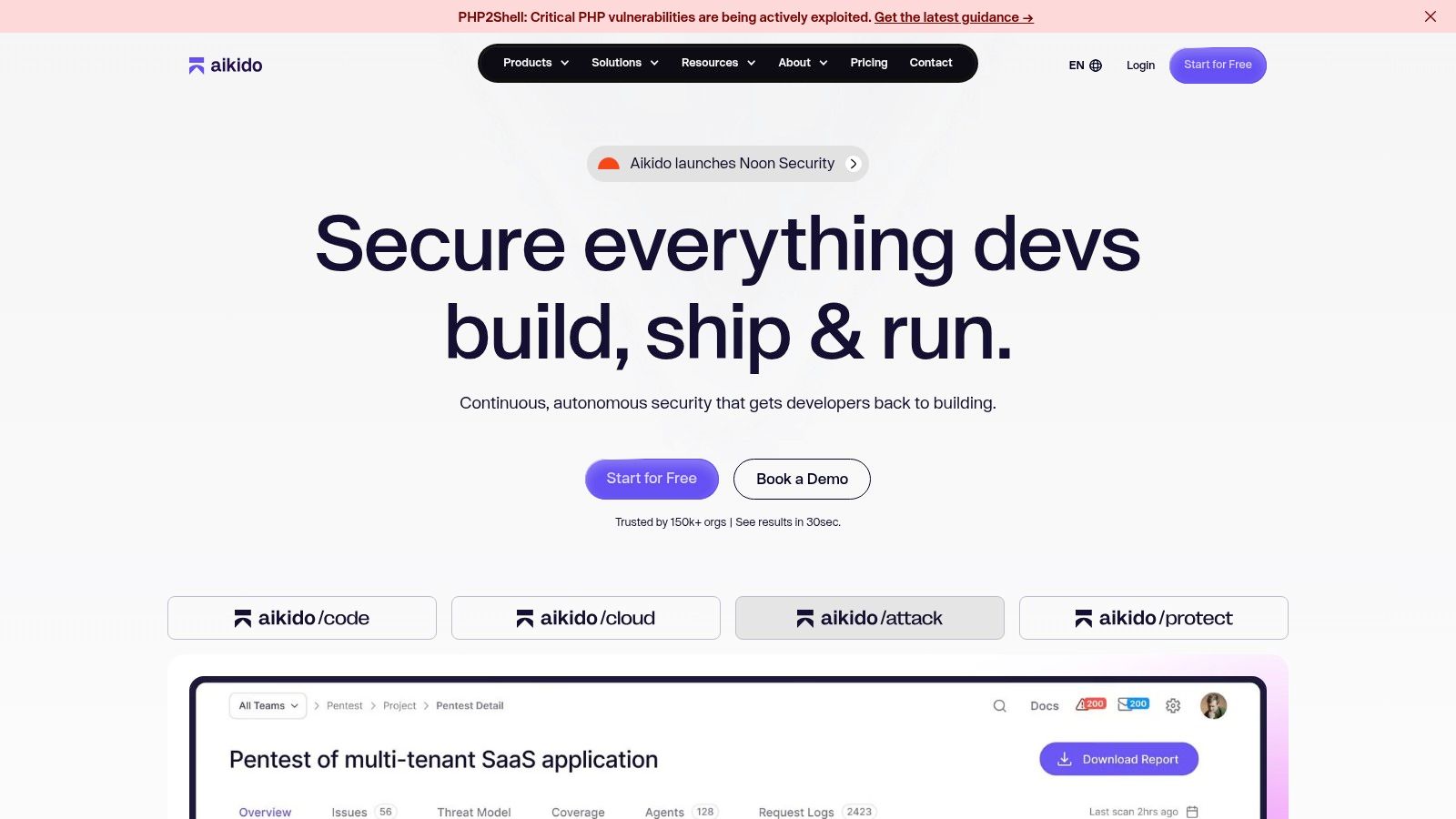
If you're buying Snyk mainly to cover several scanner types at once, Aikido Security's developer focused platform is the most direct consolidation play on this list. It combines SCA, SAST, secrets detection, cloud and IaC checks, container scanning, and DAST in one product. For small AppSec teams, that breadth removes the work of stitching together separate queues.
The practical appeal is triage. Aikido emphasizes actionable findings and reducing false positives, and it proposes pull request fixes for developers to review rather than auto merging changes. Repository access is described as read only, which helps with internal security review, and you can export an SBOM in CycloneDX, SPDX, or CSV formats for customers or auditors who ask for one.
Where It Fits and Where It Pinches
- Broad coverage in one platform: Dependency, code, secrets, infrastructure, container, and web application scanning sit together.
- Free Developer plan: You can evaluate against real repositories before involving procurement.
- Plan limits need checking: Paid plans cap repositories, images, domains, or users, so confirm which capabilities your tier includes.
Aikido won't answer design questions. It won't show whether an architecture decision was reviewed before code shipped. Treat it as a scanner consolidation, test its noise level on your messiest repository, and measure how many findings developers act on without AppSec intervention.
2. Semgrep AppSec Platform
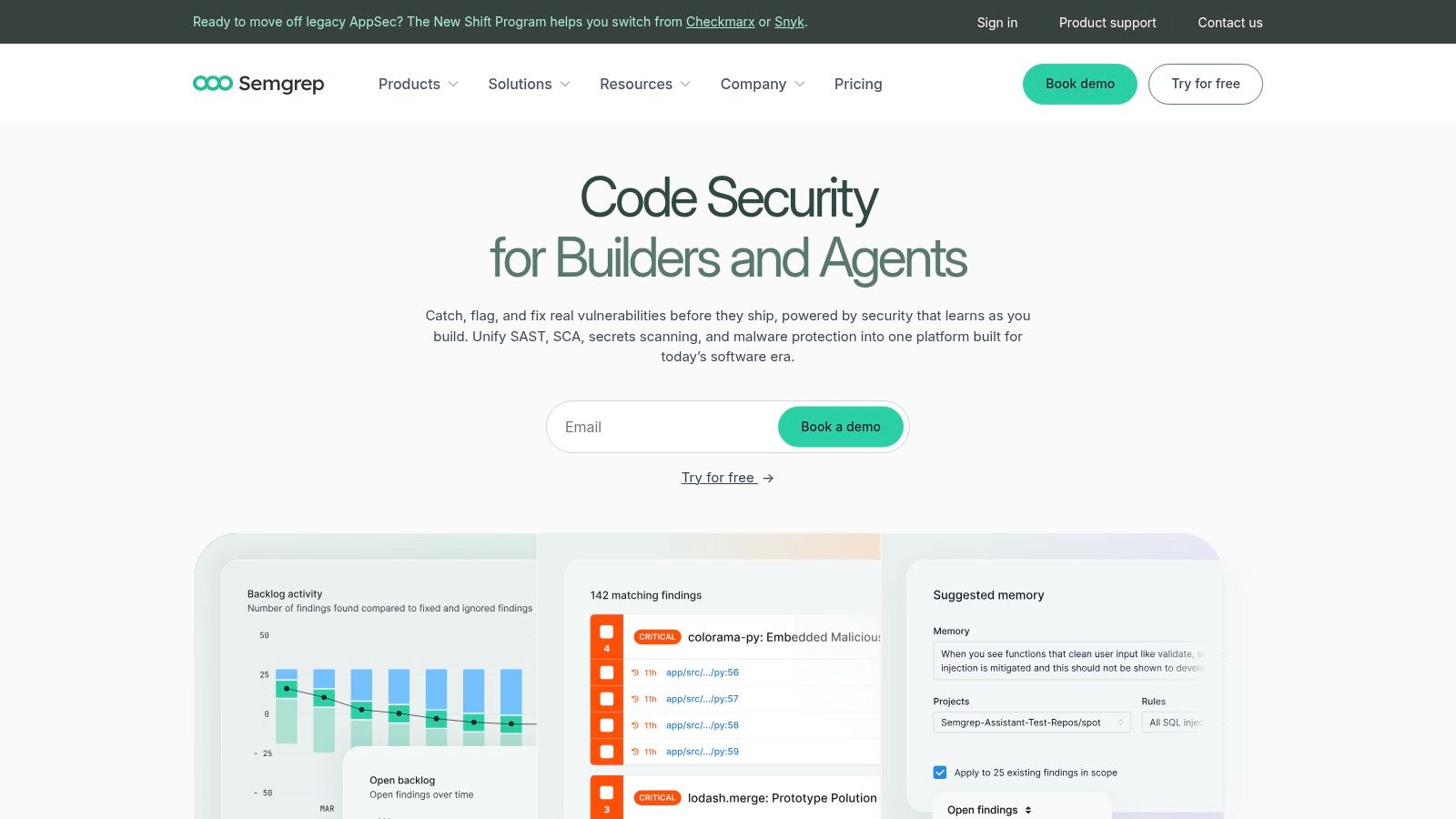
Semgrep earns its place when your security engineers want to write the rules themselves. Semgrep's AppSec platform offers SAST with cross file and cross function analysis, plus custom rules that let you ban a dangerous internal API or enforce a framework specific pattern across every service. That's a different value proposition from a closed rule set you can only tune by severity.
The supply chain side includes reachability analysis, malicious dependency detection, SBOMs, and license checks, which helps cut the classic problem of patching a vulnerable function your code never calls. Secrets scanning sits in paid plans. Integrations cover CLI, IDE, CI/CD, pull requests, and coding agents, so findings can appear where code is written, not only in a dashboard nobody opens.
If your team is comparing approaches to JavaScript static analysis in developer workflows, Semgrep is a sensible benchmark for rule quality and speed. The free tier includes Code and Supply Chain for up to 10 contributors and 10 repositories, which is enough for a real pilot.
The limits are clear. Semgrep doesn't necessarily replace Snyk's container, cloud, and IaC modules, so verify coverage before you cancel anything. Paid contributor counts are based on activity in scanned private repositories, which affects cost as more engineers touch scanned code. Custom rules also need an owner. Without one, they drift.
3. GitHub Code Security and Secret Protection
For teams already living in GitHub, the cheapest migration is often no migration to a new vendor at all. GitHub's code security and secret protection products put CodeQL based code scanning, dependency review, secret scanning, and push protection inside the pull request workflow developers already use. Findings don't require a second login or a separate triage board.
Copilot Autofix suggestions and security campaigns in Code Security help you work through a backlog in batches, assigning remediation to code owners instead of filing tickets into a void. That pairs well with disciplined CI/CD pipeline security gates that block risky merges, because the enforcement point and the fix suggestion sit in the same interface.
Practical rule: If developers have to leave their pull request to understand a finding, a large share of them won't. Workflow proximity often beats marginal detection depth.
Certain security features are available for public repositories without buying the commercial products, and eligible organizations can run a 30 day trial. That's enough time to compare CodeQL results against your current SAST output on the same commits.
The trade off is platform lock in and scope. The workflow value depends on using GitHub, and this isn't a complete replacement for every Snyk capability. Check container, IaC, and broader cloud scanning needs separately. If those matter, you'll still run another tool alongside it.
4. GitLab Application Security
GitLab makes the same platform argument as GitHub, with one addition that regulated teams notice. GitLab's application security capabilities offer cloud hosted and self managed deployment, which matters when source code or scan data can't leave your infrastructure. Security, repositories, and pipelines share one project context.
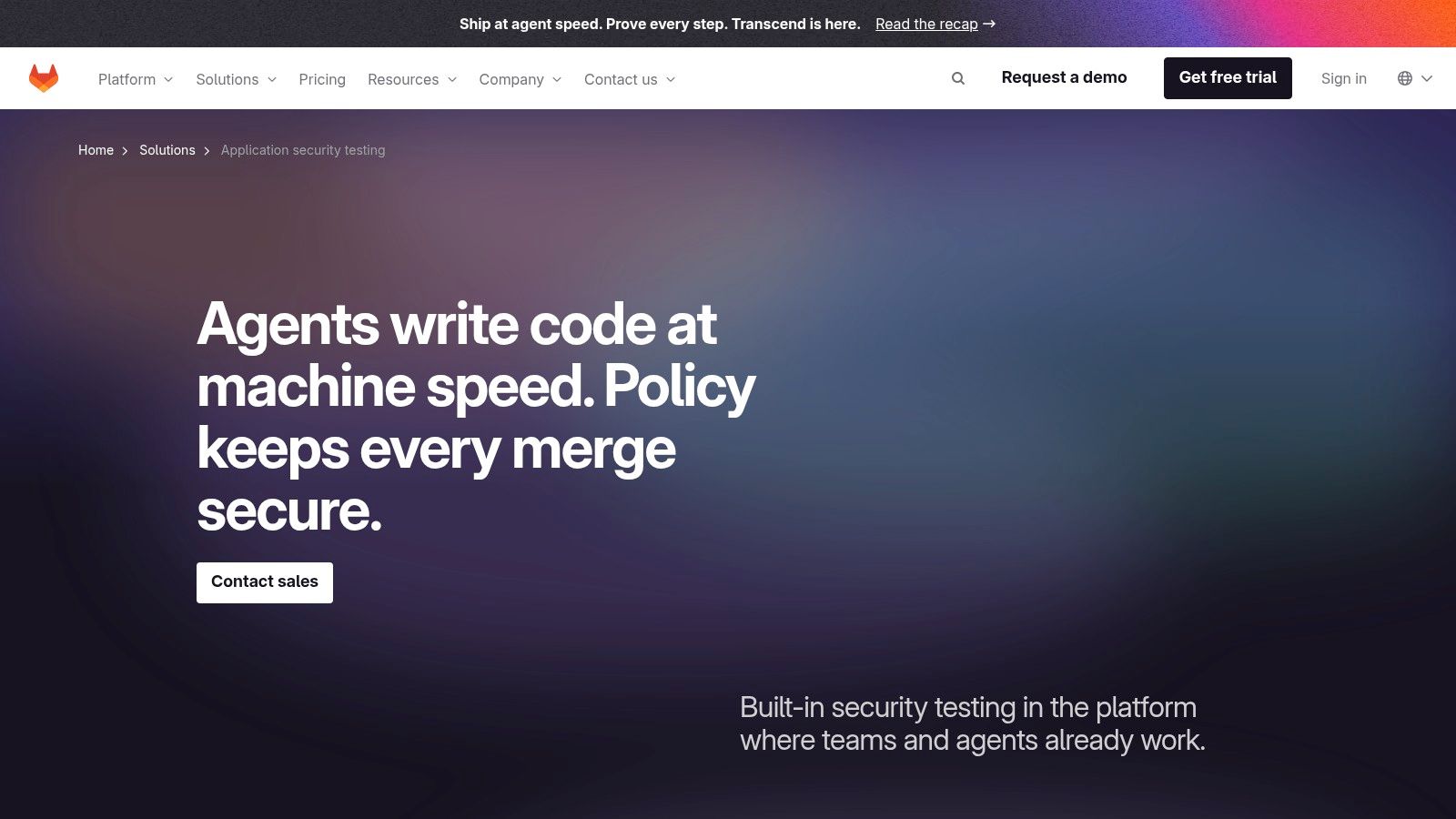
Core scanning covers static analysis, secrets detection, dependency scanning, and container scanning, with results surfaced in pipeline and merge request workflows. Higher tiers add DAST, IaC scanning, API security, and fuzz testing. A Free tier exists, and Premium has a public annual price, which simplifies early budgeting compared with quote only vendors.
Adoption data hints at why dependency visibility alone isn't enough. In Omdia and GitLab's 2024 developer survey on security and compliance, 67% of developers said more than a quarter of the code they work on comes from open source libraries, while only 20% of organizations used an SBOM. A pipeline native scanner helps close that documentation gap without a separate inventory project.
The catch is tiering. Deeper scanning, vulnerability management, and compliance controls require Ultimate, so price the tier you'll need, not the entry plan. And if you're not already on GitLab, migrating code hosting to gain scanning is a large operational project. This is a strong Snyk alternative for GitLab shops, not a reason to become one.
5. Mend AppSec
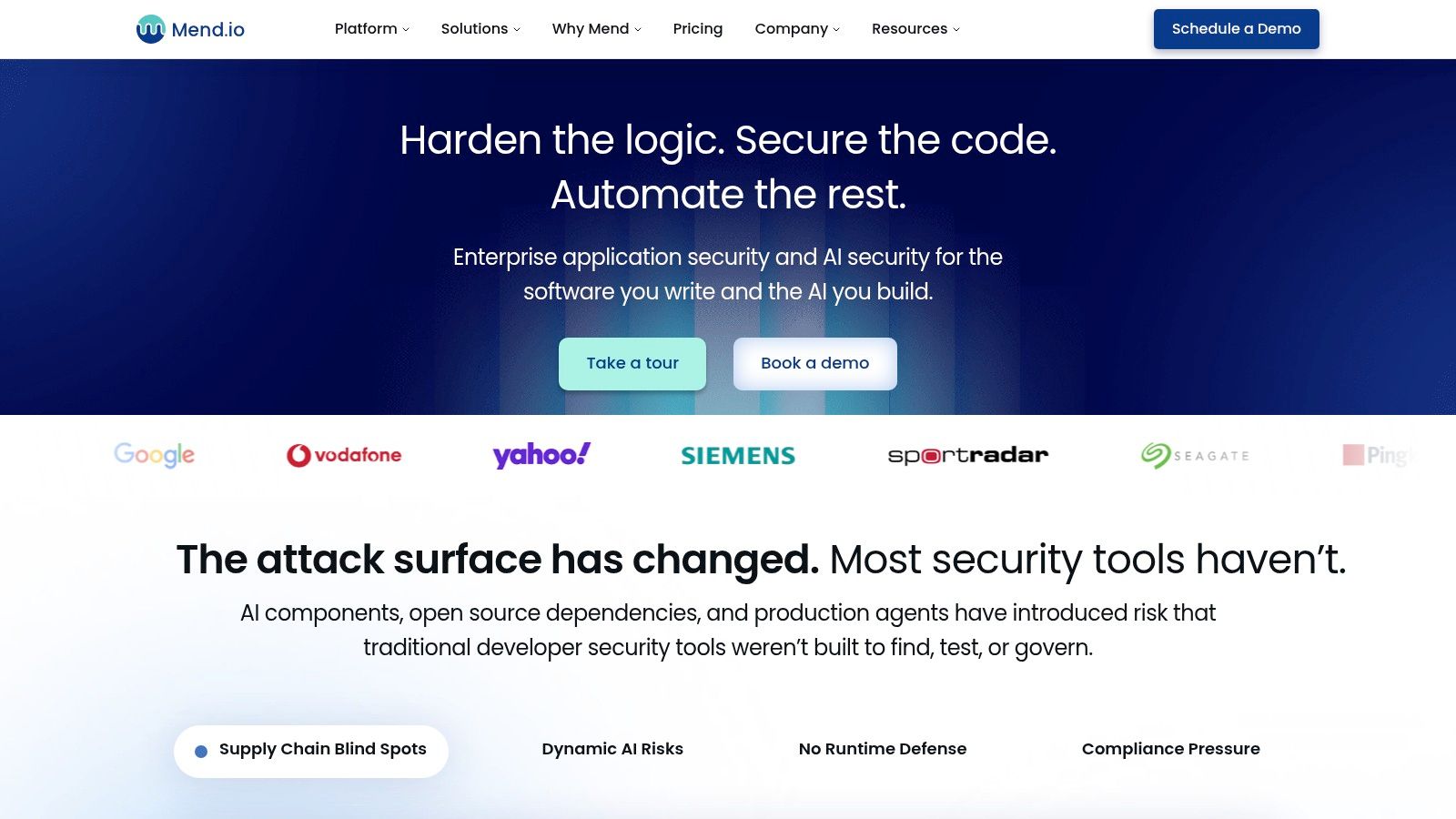
Mend is built for organizations whose dependency backlog is really a maintenance backlog. Mend's AppSec platform pairs SAST and SCA with Mend Renovate for automated dependency updates, so discovery and patching live in the same workflow. It also covers container risk and AI generated code, with AI powered fix suggestions, while DAST and API security are available as add ons.
That update automation matters more than it sounds. Many teams don't fail at finding vulnerable packages, they fail at opening, testing, and merging hundreds of small version bumps. Automating the routine upgrades frees engineers for the breaking changes that need judgment.
Pricing and Fit
- Contributing developer pricing: The published model is based on contributing developers, without per scan or code size charges, which can simplify budgeting.
- Add on costs: DAST, API security, and other expansions may cost extra, so model the full configuration.
- Quote still required: Published maximum prices may be high, so request a quote against your actual developer count.
The per contributing developer model cuts both ways. If many developers rarely touch the tool, it can feel expensive relative to usage. Pilot Mend where dependency churn is highest, and count merged update pull requests, not findings generated. That's the metric that tells you whether automation is working.
6. SonarQube
SonarQube enters Snyk conversations sideways, through code quality. Teams often already run it for maintainability, then ask whether it can absorb security scanning too. SonarQube's continuous code analysis finds bugs, vulnerabilities, and security hotspots across many languages, with pull request analysis, IDE feedback, and CI/CD quality gates that developers already understand.
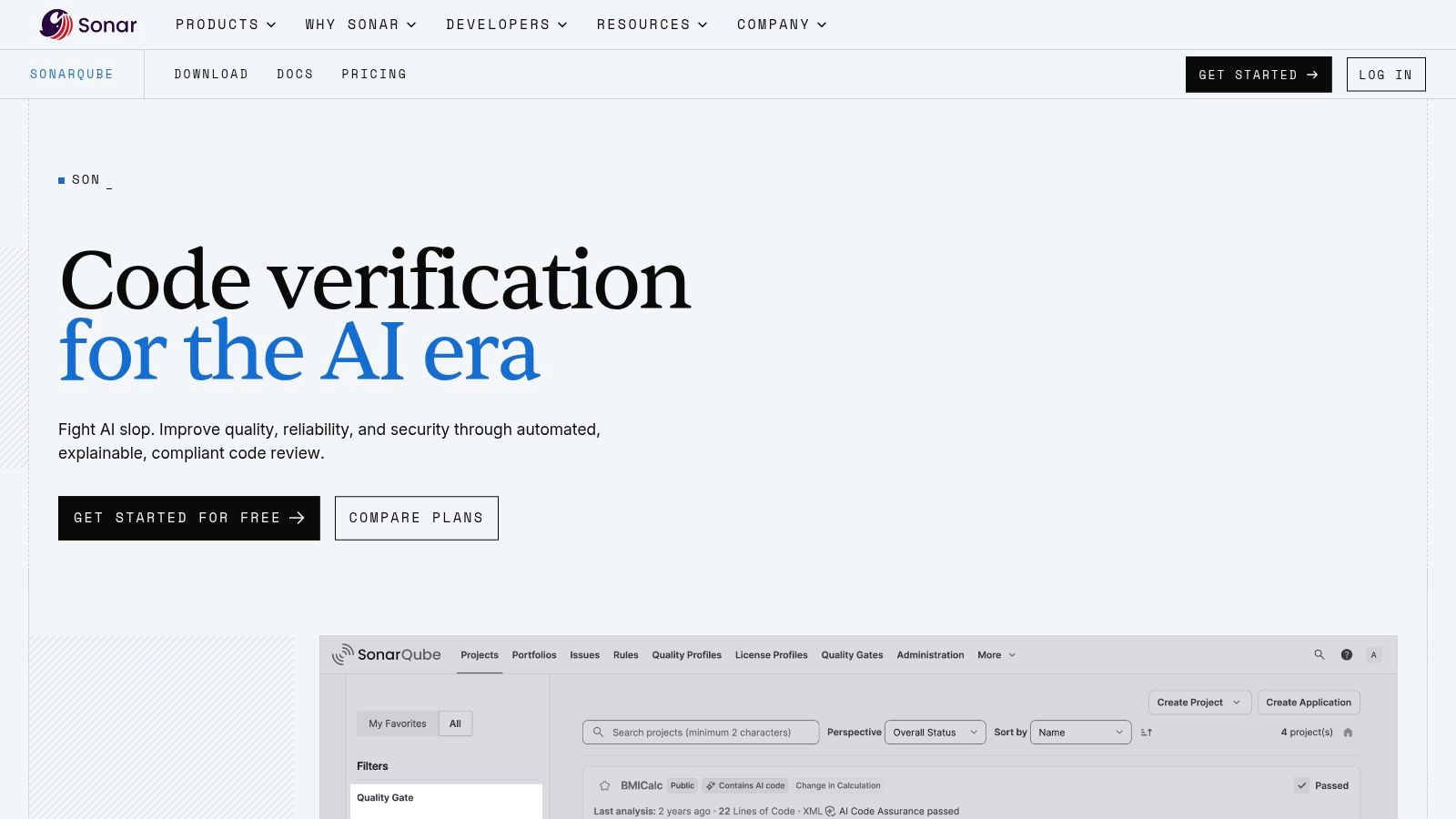
Deployment flexibility is a genuine strength, with self hosted and cloud options. Free options exist for individuals, small private projects, and eligible open source projects, so evaluation costs nothing but time. Pairing security findings with practical tips for better code reviews also helps, because a quality gate only works if reviewers treat its output as part of review rather than background noise.
A quality gate that blocks merges on new critical issues, while tolerating legacy debt, gets adopted. A gate that fails every pull request on day one gets disabled.
Be clear about scope. SonarQube isn't a full Snyk equivalent suite, and its SCA capability requires Advanced Security, which adds dependency vulnerability detection, license checks, and SBOM visibility. Verify secrets, container, and IaC coverage against your requirements. Choose it when code quality and security belong in one gate, not as a one-for-one scanner swap.
7. Checkmarx One
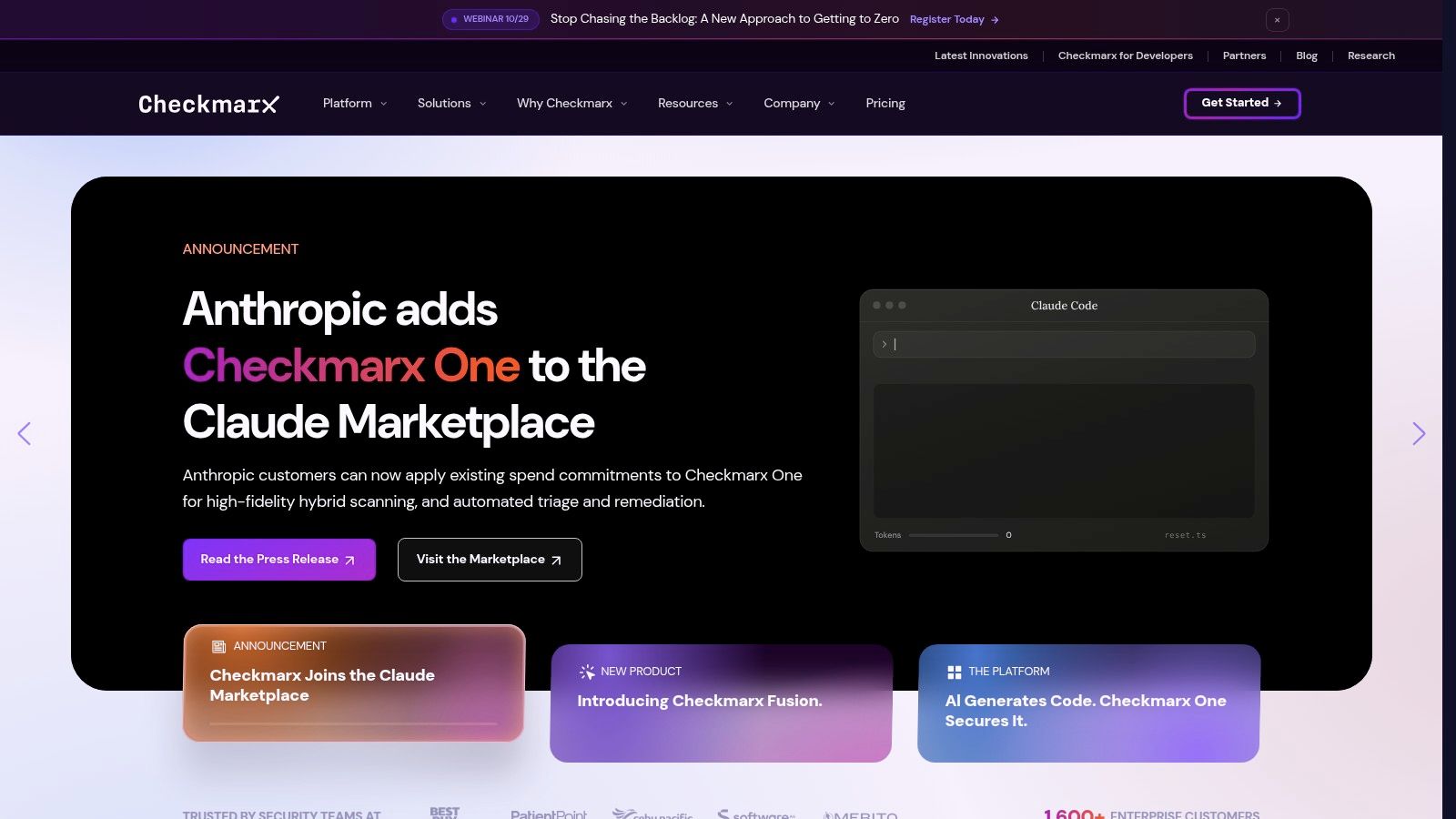
Checkmarx One targets a different buyer, the organization managing security across a large application portfolio with a formal AppSec program. Checkmarx's cloud delivered AppSec platform centralizes SAST, SCA, and DAST findings across testing types and integrates with development workflows, including GitHub Actions. Centralization is the point, one place to set policy and report across many teams.
That breadth suits established programs with varied stacks, where a lightweight developer tool can't produce the portfolio reporting leadership asks for. It also suits procurement processes that expect an enterprise platform rather than a collection of point tools.
The financial context for that kind of program investment appears in IBM's 2025 Cost of a Data Breach research, which covered 600 organizations and reported a global average breach cost of USD 4.44 million, with third party vendor and supply chain compromise averaging USD 4.91 million. Numbers like those explain why large organizations fund centralized governance, though they don't prove any single platform prevents breaches.
Validate before you commit. Pricing isn't publicly listed in the sources reviewed, and some reviewers report false positives, slower scans on large codebases, setup complexity, or a learning curve. Run it against your largest repository early. Scan time at portfolio scale is a buying criterion, not a detail.
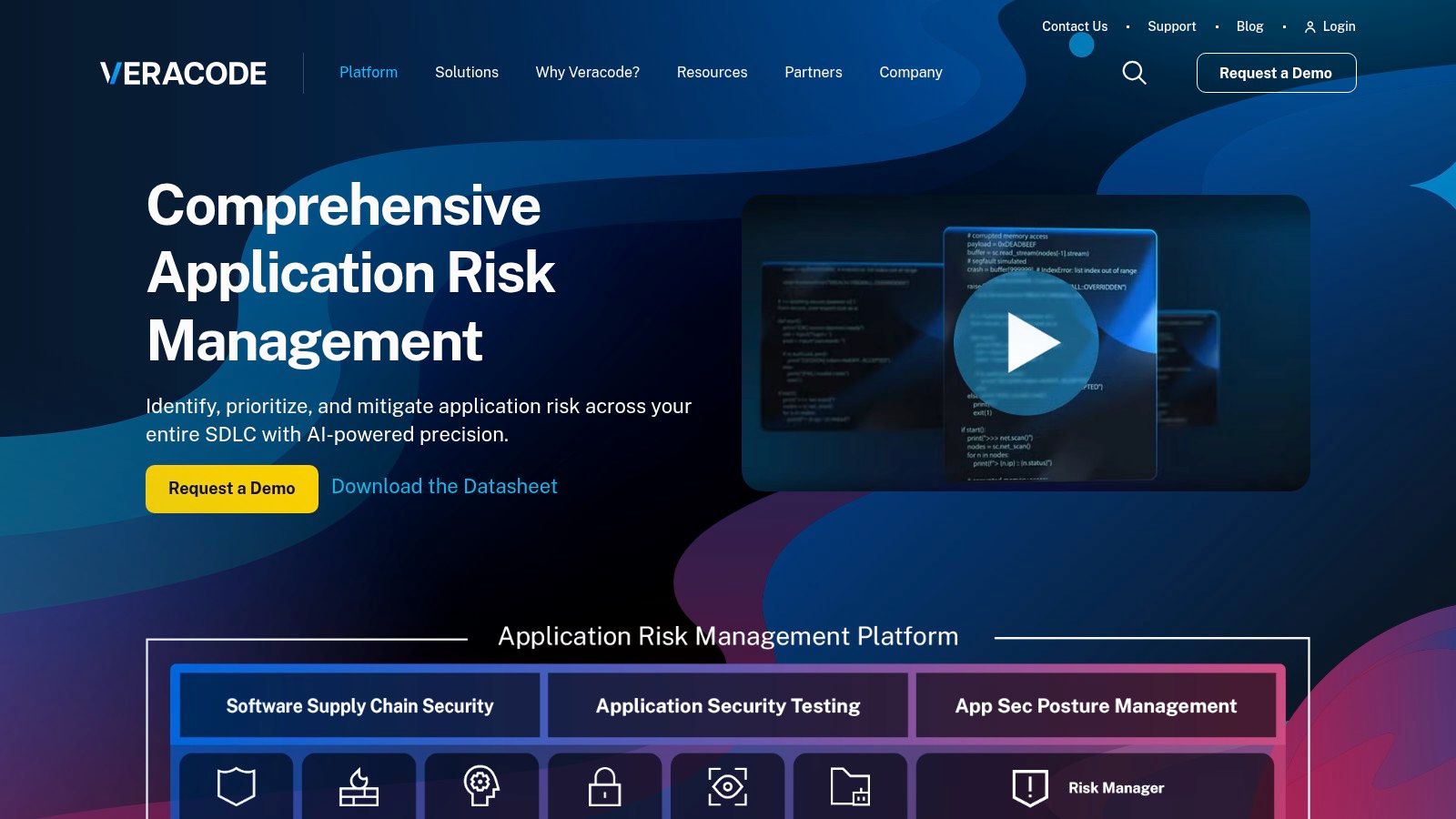
8. Veracode Application Risk Management Platform
Veracode suits teams that need application scanning and centralized program oversight in one platform. Veracode's application risk management platform combines SAST, SCA, and DAST with container and IaC testing. It brings results together with analytics and integrations for source control, CI/CD, ticketing, and GRC workflows. Package Firewall can block untrusted packages, and AI-generated remediation suggestions are available.
The strongest case for shortlisting Veracode is measuring remediation across a program. Veracode's 2025 analysis of 1.3 million applications and 126.4 million findings found that top-performing organizations fixed half their flaws in about five weeks, while the bottom quartile took more than a year. The analysis also found 82% of organizations carried security debt older than one year. Use the five-week benchmark to set a pilot target, regardless of which tool you test.
For regulated teams, assess whether centralized policy controls and governance reporting match the way your program manages risk. Don't treat the benchmark as proof that the platform will deliver the same remediation pace; measure results on your own repositories and workflows.
Public pricing wasn't available in the sources reviewed, so budget discovery requires a sales conversation. The platform's breadth also calls for a hands-on trial: test user experience and workflow fit with developers, because a tool they work around adds little risk reduction.
9. Sonatype Guide
Sonatype Guide is not trying to be a full Snyk replacement, and that's its strength. Sonatype Guide's component intelligence and governance focuses on open source component and vulnerability information, including OSS Index access, dependency governance, and automated upgrades. If your Snyk usage is overwhelmingly SCA, a specialist may serve you better than a suite.
The governance layer is where it earns consideration in regulated environments. Enterprise options cover policy management and compliance workflows, and Repository Firewall products can block or quarantine risky or malicious components before they enter your build. Preventing a bad component at the repository boundary beats scanning for it in forty services later.
What You Get and What You Don't
- Free Guide tier: Includes OSS Index, a component and vulnerability database, and API and MCP access for evaluation.
- Paid automation: Higher plans add governance and upgrade automation.
- Narrow scope: It doesn't replace Snyk's SAST, IaC, container, and cloud capabilities.
Packaging and new customer pricing have changed, so confirm exactly which components a quote includes. The relevant question for Sonatype isn't whether it does everything. It's whether dependency decisions, with owners, policies, and exceptions, are the control your program needs. For supply chain heavy teams, that narrower, deeper tool often beats a broader, shallower one.
10. OWASP Dependency-Check
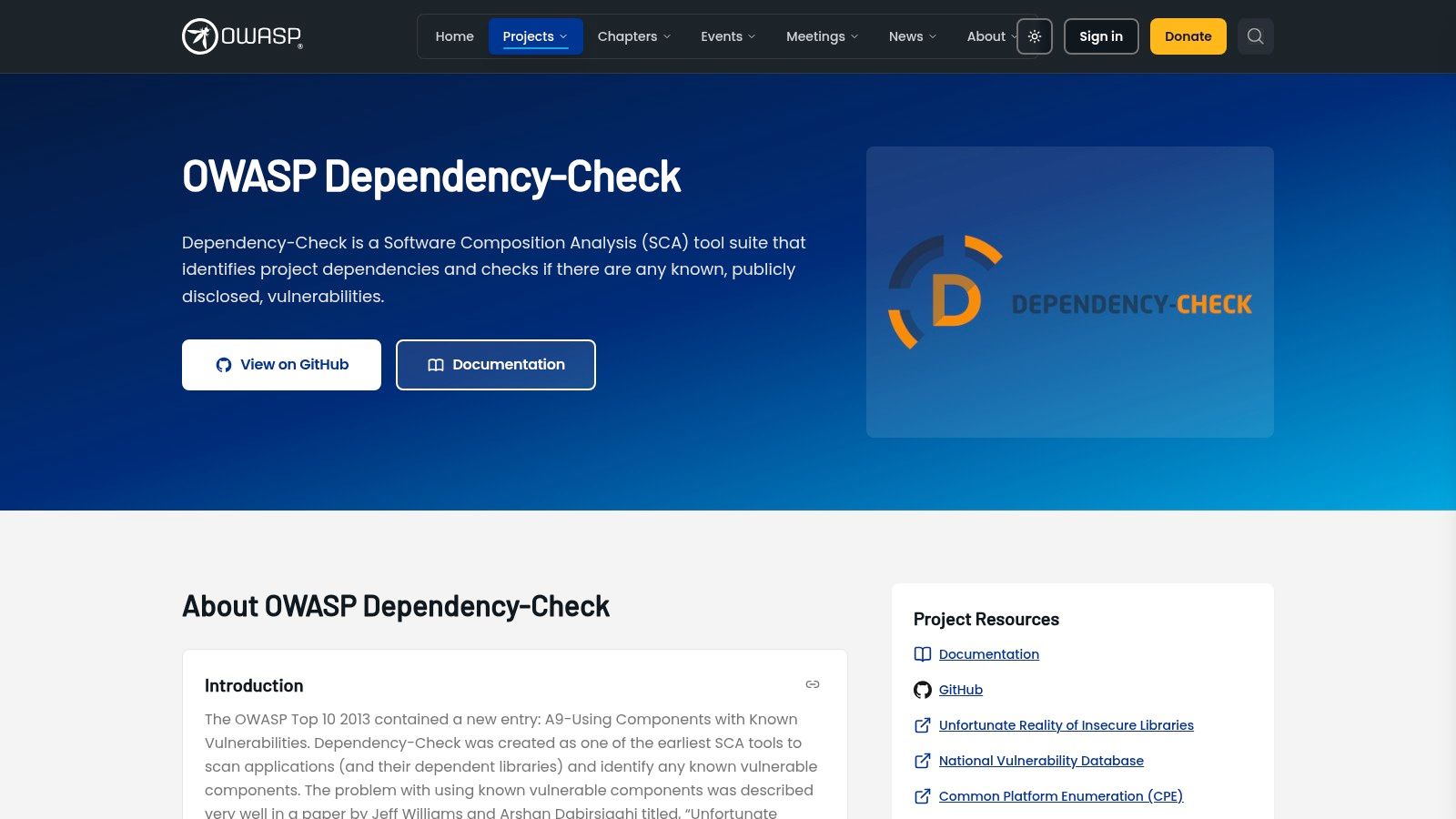
Every list needs an honest free option. OWASP Dependency-Check's open source SCA tool identifies project dependencies and checks them against publicly disclosed vulnerability data, including the NVD. It's distributed under the Apache License 2.0, with command line scanning and Maven, Gradle, and Ant integrations, plus CI/CD options for Jenkins, GitHub Actions, and Azure DevOps.
For a team that can operate its own tooling, that's a workable dependency layer at no subscription cost. It fits self managed pipelines where sending code or manifests to a vendor is a problem, and it pairs naturally with a broader software composition analysis process for governing third party components rather than treating the scan itself as the control.
Cost reality: Free software moves the expense from license line items to engineering hours. Budget for the hours honestly and it's still often worth it.
The limits are strict. This is SCA only, with no SAST, IaC, container, or secrets scanning. Your team owns configuration, maintenance, and triage, and component identification depends on matching evidence to package identifiers, so findings need validation against your ecosystem and build setup. Choose it when dependency checking is the gap and you have the staff to run it well.
Snyk alternatives at a glance
| Item | Best For | Free Tier | Pricing Signal | Main Gap vs. Snyk |
|---|---|---|---|---|
| Aikido Security | Teams consolidating multiple security scanners in one developer-focused platform | Free Developer plan for small-scale evaluation | Paid plans have limits on repositories, images, domains, or users | Confirm which capabilities are included in each plan |
| Semgrep AppSec Platform | Teams prioritizing code analysis, custom rules, and developer-workflow integrations | Code and Supply Chain for up to 10 contributors and 10 repositories | Paid contributor limits depend on activity in scanned private repositories | Verify coverage for containers, cloud, and IaC |
| GitHub Code Security and Secret Protection | Teams managing code and pull requests on GitHub | Certain features for public repositories; eligible organizations can get a 30-day trial | Commercial products; trial available to eligible organizations | Best fit depends on GitHub, and container, IaC, and broader cloud coverage may be limited |
| GitLab Application Security | Teams combining security scanning with GitLab repositories and CI/CD | Free tier available | Premium has a public annual price; deeper capabilities may require Ultimate | Some advanced scanning and controls require Ultimate; strongest fit is for existing GitLab users |
| Mend AppSec | Organizations seeking SCA, SAST, container security, and dependency-update automation | Not specified | Pricing based on contributing developers; add-ons may cost extra | DAST and API security are add-ons; per-developer pricing may be costly for larger teams |
| SonarQube | Teams combining code-quality checks with security analysis | Free options for individuals, small private projects, and eligible open-source projects | SCA requires an Advanced Security subscription | Not a full suite; verify secrets, container, IaC, and dependency-analysis coverage |
| Checkmarx One | Organizations testing security across large application portfolios | Not specified | Pricing not publicly listed in sources reviewed | Potential setup complexity, learning curve, and scan performance concerns |
| Veracode Application Risk Management Platform | Organizations needing multiple testing methods and portfolio-level security reporting | Not specified | Public pricing not available; sales conversation may be needed | Broader program-management focus may not match Snyk's developer-first workflow |
| Sonatype Guide | Teams focused on open-source dependency risk, policy, and supply-chain governance | Free Guide tier includes OSS Index and API/MCP access | Paid plans add automation and governance; confirm current packaging and pricing | Focuses on software supply chain rather than Snyk's broader security capabilities |
| OWASP Dependency-Check | Teams adding self-managed dependency checks to builds | Free and open source | No commercial subscription required | SCA-only; teams manage configuration, maintenance, and triage themselves |
Choosing a Snyk Replacement Based on the Job You Need Done
Don't start with a vendor shortlist. Start with an inventory of the Snyk modules you use, whether that's SCA, SAST, secrets, container, IaC, or cloud scanning, and how many findings each one produced that anyone fixed. Modules that generate reports nobody reads shouldn't drive a purchase. Then shortlist only tools that cover the modules carrying real risk for you.
Run a two week pilot on one representative repository, ideally a service with messy dependencies, active development, and a named owner. Measure median triage time, false positive rate, and how many findings developers close without AppSec chasing them. Compare remediation speed against the leading performer benchmark noted earlier. A tool that finds slightly more but takes twice as long to triage is a worse choice for teams prioritizing remediation speed.
Migration Work Nobody Budgets For
- Export historical findings: Preserve records auditors may ask about after you leave the old platform.
- Rebuild ignore rules and policies: Suppressions rarely transfer cleanly, and each one needs an owner and a reason.
- Update CI gates: Rewire merge blocking gradually so teams aren't surprised by a new failure mode.
- Preserve audit trails: Keep evidence of reviews, exceptions, and approvals in a system that survives the migration.
That last item exposes the gap scanners leave. As existing Snyk alternative comparisons focused on feature checklists show, most roundups compare scanning categories and pricing, which helps procurement but says little about decision traceability. A scan tells you a package is vulnerable today. It doesn't tell an auditor why an architecture was approved, whether the merged code still matches that design, or who accepted an exception and when it expires.
AI assisted development widens that gap. Coverage summarized in recent Snyk alternatives discussion of AI code concerns reports that 92% of surveyed security leaders are concerned about insecure code and 76% view ASPM as a strategic investment priority, with AI generated code as a major driver. Faster code generation without design context just produces review burden faster. The control that matters is whether an agent or a developer receives enforceable, service specific policy before merge, not whether a scanner flags the output afterward.
For regulated, fast moving teams in FinTech, HealthTech, or Media, that's where a design stage platform such as DevArmor is worth evaluating. It focuses on continuous threat modeling, design reviews inside Jira, Google Docs, GitHub, and VS Code, Policy as Code merge blocking, and architecture evidence suited to frameworks discussed in comparisons of SOC 2 versus ISO 27001. That's a different job from scanning, and it shouldn't be scored on CVE counts.
Be honest about combinations. A scanner first tool and a design first platform often work best together, one finding known weaknesses in code and dependencies, the other preserving security intent across design, implementation, and deployment. A small team with mainly dependency risk may need only a single SCA tool like Sonatype Guide or OWASP Dependency-Check. Match the purchase to the job, measure the pilot, and keep the evidence.
If your pilot shows developers fixing scanner findings but still shipping unreviewed design changes, look at how DevArmor keeps threat models, design reviews, and Policy as Code enforcement inside the tools your teams already use. It's built for regulated, fast moving teams that need audit ready security decisions without slowing delivery, so visit the site and see how continuous threat modeling fits alongside whichever scanner you choose.
Table of Contents
Subscribe


