
Secure Coding Best Practices: 10 Controls That Work
 Reza Khosravi
Table of Contents
“Validate input” is good advice. It isn't a secure development program. A team can validate every request field and still ship an endpoint that lets customers download someone else's invoices. Secure coding is a lifecycle, not a linter, and the hard part is making security requirements survive design changes, implementation shortcuts, dependency upgrades, and release pressure.
The scope extends beyond code your developers write. Veracode's 2024 State of Software Security announcement reported first-party flaws in 63% of applications and third-party flaws in approximately 70%. Reviewing application functions while ignoring packages and build infrastructure leaves a substantial part of the system outside your controls.
Foundational secure coding practices for app developers become useful engineering requirements when you specify where each applies, who owns it, and what blocks a release. That means design-time threat models, safe implementation patterns, dependency checks, and review policies connected to the same security decisions.
The practical test is simple: can a developer tell why a control exists, reproduce its check locally, and see an actionable failure before merging? If not, you've written guidance, not enforced a control.
1. Threat Modeling During Design
Start with a feature, not an architecture diagram covering the entire company. For a document-sharing service, draw the browser, API, object store, identity provider, and background workers. Mark where identities, permissions, and sensitive data cross trust boundaries.
Then ask concrete questions. Can a user substitute another tenant's document identifier? Can a worker fetch an attacker-controlled URL? Can an expired sharing link still retrieve a cached file?
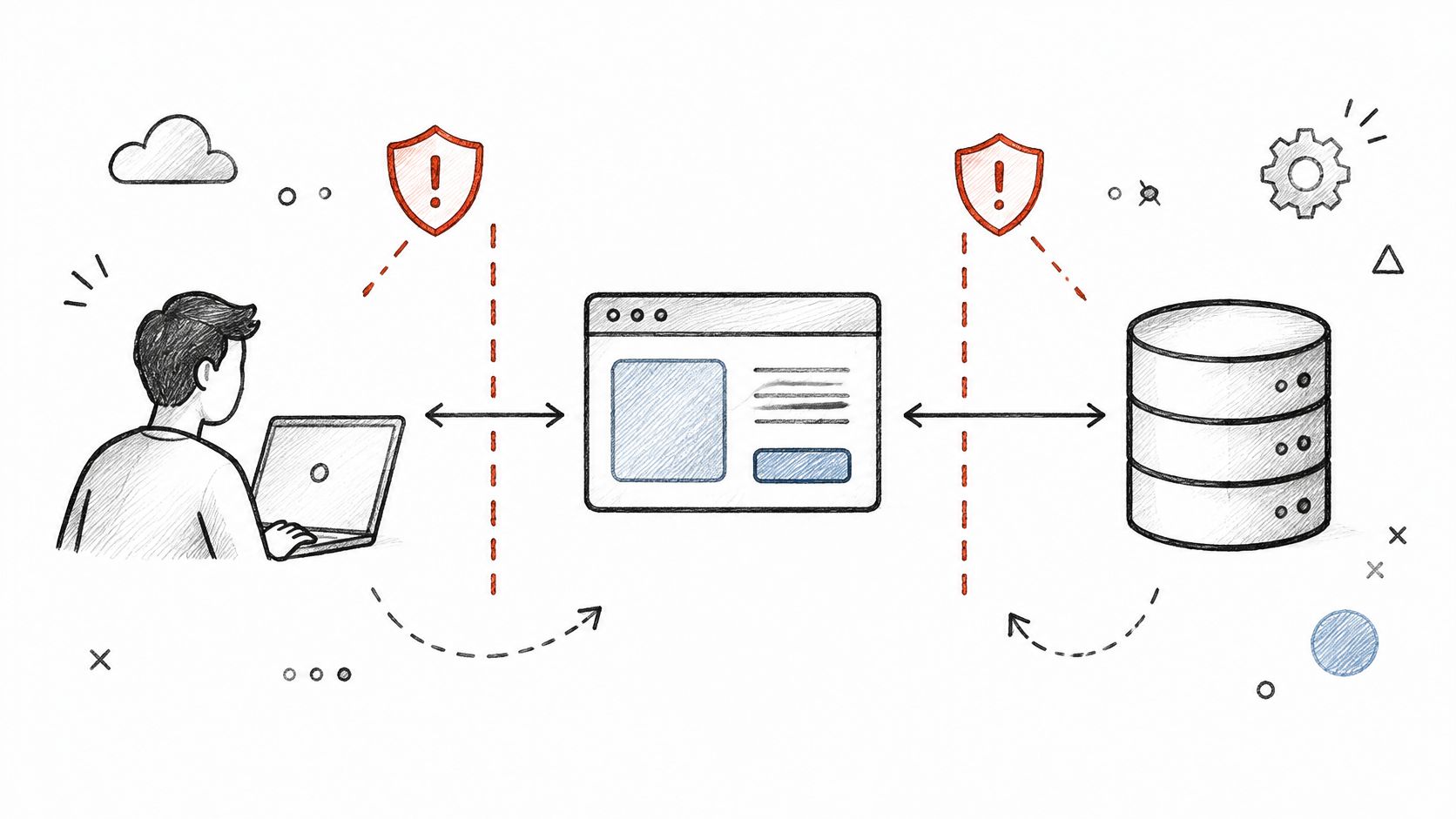
Use STRIDE to organize the discussion around spoofing, tampering, repudiation, information disclosure, denial of service, and elevation of privilege. Don't mistake completing the categories for completing the work. Each relevant threat needs a mitigation, an owner, and a way to verify implementation.
Make the design decision enforceable
Store the model beside the code or link it from the feature ticket. Translate decisions into review requirements:
- Tenant isolation: Require server-side ownership checks and cross-tenant rejection tests.
- Outbound requests: Restrict destinations and reject access to internal services.
- Design changes: Require model updates when a pull request adds an integration, datastore, or permission boundary.
AI-assisted development needs the same context before generation. A controlled study of AI-generated code found that critical vulnerabilities increased by 37.6% after five rounds of iterative improvement in its evaluated samples.
Treat prompts that change authentication, data handling, or trust boundaries as security-relevant changes. A request to simplify a handler shouldn't remove the ownership check your design required without notice.
2. Input Validation and Context-Aware Output Encoding
A signup form can reject malformed email addresses and still render an attacker-controlled display name unsafely. Validation and output encoding solve different problems. Validation decides whether input fits your application's contract; encoding prevents accepted content from becoming executable instructions in its destination context.
Define schemas at server-side entry points using JSON Schema, typed request objects, or a framework validator. Specify expected types, lengths, ranges, permitted values, and unknown-field behavior. Client-side validation improves usability, but an attacker can bypass the browser entirely.

For production-ready signup forms for SaaS teams, keep browser feedback and server-side enforcement consistent without treating them as equivalent controls. Avoid binding request objects directly to persistence models, especially when those models contain fields such as account roles or billing status.
Encode where the data is used
Use your template engine's automatic escaping for ordinary text. Review React's dangerouslySetInnerHTML and equivalent raw-rendering escape hatches explicitly. If users need rich HTML, sanitize it with a maintained HTML sanitizer rather than a character blacklist.
- HTML output: Use contextual escaping and safe DOM APIs.
- URLs: Validate permitted schemes and destinations, then encode individual components.
- Structured input: Reject oversized collections, unexpected nesting, and invalid types before business logic runs.
Add hostile test cases involving markup, encoded characters, and boundary-length values. A Content Security Policy adds defense in depth, but it doesn't excuse unsafe rendering or replace parameterized database access.
3. Parameterized Queries and Injection Prevention
Keep instructions separate from data. A database should receive a fixed query structure and separately bound values, not a string assembled from request parameters.
Say an invoice search endpoint accepts a customer name and sort order. Bind the customer name as a parameter. Map the requested sort order to an application-owned list of permitted column names because query parameters generally can't stand in for SQL identifiers.
An ORM helps only when developers use its safe interfaces. Raw-query escape hatches and interpolated filter fragments can reintroduce injection even inside an otherwise well-structured application. The implementation details in SQL query parameterization matter most at those boundaries.
Practical rule: Validate business meaning, but use safe APIs to separate code from data. A validator isn't a substitute for parameter binding.
Apply the same reasoning beyond SQL. Use subprocess APIs with separate argument arrays and shell execution disabled. Validate arguments that the target executable could interpret as options, and avoid passing attacker-controlled expressions to template or expression evaluators.
Block unsafe construction patterns
Configure Semgrep or CodeQL to flag request-derived values flowing into raw SQL and command-execution sinks. Require security review for exceptions rather than letting developers suppress rules without explanation.
Regression tests should verify that hostile input remains data and cannot broaden query results. Also give the application's database identity only the permissions it needs. Parameterization prevents injection through bound values; narrow database permissions limit damage from other defects.
Don't test solely for database errors. An injection attempt can change query behavior without producing an exception.
4. Strong Authentication, Authorization, and Session Management
A valid login doesn't grant access to every object in the system. Authentication establishes identity. Authorization decides whether that identity may perform this action on this resource. Keep those decisions distinct in code and in tests.
Use a maintained identity provider or framework rather than building password reset, token verification, and account recovery from scratch. Require phishing-resistant multifactor authentication for privileged access where your identity stack supports it. If you store passwords, use Argon2id through a maintained library and tune its resource requirements against your service's capacity.
Test the resource boundary
For a healthcare scheduling application, create separate test identities belonging to different organizations. Have one identity request the other's appointment using a valid identifier. Verify denial across reads, updates, exports, and background processing, not just the browser page.
- Central policy: Put authorization in a shared policy layer, while passing the resource and tenant context it needs.
- Server-side enforcement: Never trust hidden buttons, client roles, or user-supplied tenant identifiers.
- Session lifecycle: Rotate session identifiers after login and privilege elevation, and provide effective revocation after logout or compromise.
Use secure, HTTP-only cookies for browser sessions where appropriate, with a SameSite policy suited to the application's flows. Add CSRF protection when the authentication mechanism requires it.
Be explicit about token revocation trade-offs. A self-contained access token may remain usable until expiry unless services consult additional revocation state. Test the actual behavior rather than assuming a logout button invalidates every issued credential.
5. Least Privilege and Secure Defaults
An upload processor doesn't need permission to administer identity policies. A reporting service doesn't need write access to the production database. Granting broad permissions to clear a deployment error replaces a visible operational problem with a less visible security problem.
Start service identities with no permissions, then add the specific actions and resources their jobs require. Use access logs from controlled testing to investigate missing permissions, not as an automatic justification to grant everything requested.
For a media-processing worker, separate access to incoming uploads from access to published assets. If an attacker compromises a parser, that worker shouldn't be able to overwrite every published file or retrieve unrelated customer data.
Make the safe path the default
Put restrictive settings into templates and scaffolding so new services inherit them. The principles behind security by default should appear in repository configuration, deployment manifests, and application startup checks.
- Infrastructure policies: Flag wildcard permissions and require justification for broad resource access.
- Runtime configuration: Disable debug endpoints and reject missing security-critical settings.
- Temporary elevation: Require approval, a defined scope, expiry, and a reviewable record.
Deny-by-default isn't an instruction to make production unreliable. Test failure behavior, document required permissions, and provide a controlled emergency-access path.
A secure default should work in the standard deployment. If every team must disable it to ship, fix the template or the platform.
Enforce these decisions with infrastructure-as-code checks and configuration tests in pull requests. Review the effective permissions after deployment too, because inherited roles and resource policies can expand access beyond the configuration file under review.
6. Secrets Management and No Hardcoded Credentials
Deleting a committed API key doesn't make it secret again. Copies may remain in repository history, build artifacts, logs, or developer workspaces. Revoke or rotate exposed credentials first, then remove them and investigate where they were used.
Prefer workload identity and short-lived credentials over static keys. When an application needs a stored secret, retrieve it through a dedicated manager such as HashiCorp Vault or AWS Secrets Manager, using an identity scoped to that application's needs.

A payment integration illustrates the boundary. The server retrieves the provider credential at runtime; the browser receives only values explicitly intended for public client use. Obfuscating a secret inside a JavaScript bundle doesn't protect it.
Scan before push and before merge
Run gitleaks or TruffleHog locally and in CI. Local hooks provide fast feedback, but centrally enforced checks matter because developers can bypass hooks.
- Developer setup: Keep real
.envfiles untracked and provide templates containing placeholders. - Build protection: Prevent secrets from entering image layers, caches, generated files, and diagnostic output.
- Rotation readiness: Test credential replacement without relying on a full application outage.
A secrets manager introduces availability and bootstrap considerations. Decide whether applications retrieve secrets at startup or refresh them during execution, and test manager unavailability.
Don't solve an outage by adding a permanent fallback credential to source control. Make recovery procedures explicit and restrict who can use them.
7. Dependency Management and Software Supply Chain Security
Reviewing your own functions doesn't tell you what your application ships. Veracode's 2025 State of Software Security benchmark found flaws in third-party code in approximately 70% of tested applications. Dependency security needs its own inventory, ownership, and remediation workflow.
Generate a software bill of materials, or SBOM, from the resolved build and retain it with the release artifact. Include transitive dependencies and container components, not just the packages developers added directly.
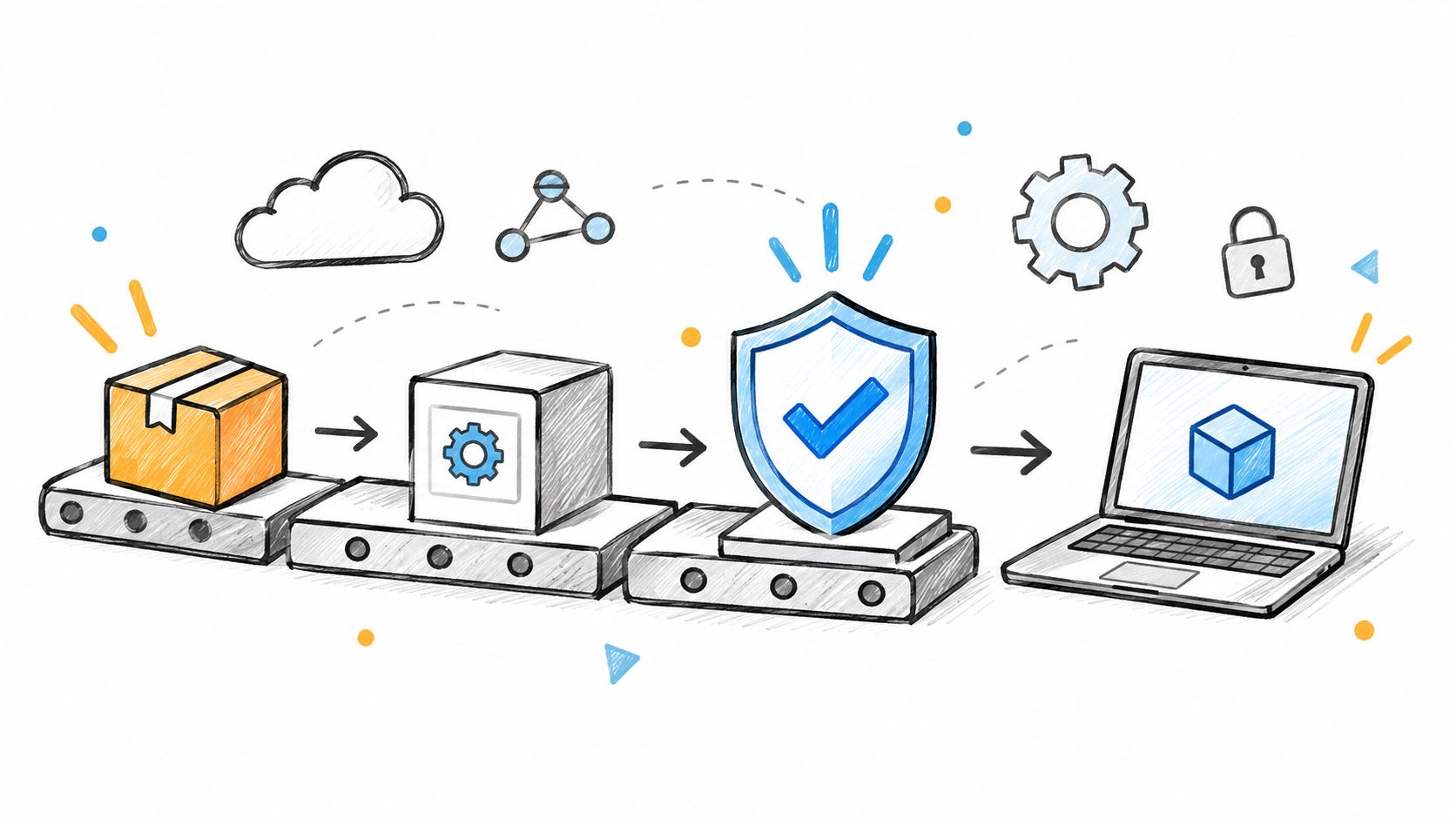
Use software composition analysis to connect vulnerable components to affected repositories and releases. Pin resolved versions, verify integrity where supported, and use Renovate or Dependabot to propose updates through normal review.
Separate notification from disposition
For a vulnerable image-processing library, identify whether the affected feature is reachable, which deployed services include it, and who owns the upgrade. Reachability informs urgency; it shouldn't become a permanent excuse to retain unsupported packages.
- Merge rules: Block prohibited dependencies and actionable high-risk vulnerabilities.
- Exceptions: Record exposure, compensating controls, an owner, and an expiry.
- Build integrity: Restrict runners, protect release credentials, and verify artifact provenance before deployment.
Agree on these criteria before a contentious upgrade. Explicit review criteria help reduce hidden bias in team decisions when maintainers and security reviewers weigh different risks.
Automatic merging is reasonable for selected low-risk updates with strong tests. Major framework changes need compatibility review, staged rollout, and a rollback plan.
8. Automated Security Testing in CI and Policy-Enforced Code Review
A scanner installed somewhere isn't a control on every change. According to Black Duck Research's security-debt announcement, 46% of surveyed organizations in 2025 still used manual processes to put new code into security-testing queues. Remove that handoff by triggering checks from repository events.
Run fast static analysis, secrets detection, and dependency checks on pull requests. Run dynamic testing against a representative deployed environment, with authenticated coverage where needed. Don't force a slow test suite into every local edit when incremental checks can provide earlier feedback.
Give each finding a defined outcome
Start with high-confidence blocking rules. A hardcoded production credential should stop a merge; an uncertain legacy finding may need triage and a tracked remediation plan.
- Required checks: Protect branches and prevent unreviewed workflow changes from disabling enforcement.
- Sensitive changes: Require designated review for authentication, payments, cryptography, and sensitive-data handling.
- Exceptions: Record approval, rationale, scope, and expiry alongside the change.
Human review must address architecture, not just scanner output. A 2025 ACM developer study surveyed 105 developers and found that only about one-quarter were confident in AI-generated code.
For an AI-generated authorization refactor, require tests tied to the intended access policy and an accountable reviewer. Passing functional tests doesn't establish that the policy stayed intact.
Keep rule failures actionable: identify the affected code, explain the risk, and show an approved remediation pattern. Developers shouldn't need to reverse-engineer the scanner to fix a blocked pull request.
9. Secure Error Handling, Logging, and Monitoring
A failed authorization lookup must not become permission granted. A database exception must not expose connection details to the caller. Fail safely at the decision point, then return a stable error response with a correlation identifier.
For a financial transfer endpoint, distinguish what the customer needs from what investigators need. The customer needs a safe status and reference identifier. Investigators need the authenticated actor, relevant resource references, policy outcome, and timestamps, subject to your data-handling rules.
Define the event contract
Use structured logging with explicit fields instead of concatenating raw user input into free-form messages. Escape control characters where necessary so attacker-controlled values can't forge entries or disrupt downstream parsers.
- Required events: Record authentication failures, authorization denials, administrative actions, and security-setting changes.
- Prohibited content: Exclude passwords, access tokens, signing material, and unnecessary personal information.
- Protected access: Restrict log readers, control retention, and separate application write access from administrative deletion.
Don't log an entire request because you haven't decided which fields matter. Define the fields before collecting the traffic.
Add tests that trigger exceptions and inspect both responses and captured logs. Verify that secrets don't appear and that security events preserve useful context.
Forward relevant events to your monitoring platform and assign owners to alerts. Repeated denials, unexpected privilege changes, or disabled logging deserve investigation, but thresholds need application context to avoid overwhelming responders.
Test the operational path too. An alert that nobody receives isn't detection, and an audit trail that administrators can alter without notice isn't dependable evidence.
10. Use Vetted Cryptography and Secure Transport
Cryptography fails at integration boundaries as well as inside algorithms. A sound cipher won't protect data if developers reuse nonces incorrectly, expose keys in configuration, or disable certificate validation to make an integration work.
Use high-level, maintained libraries such as libsodium or Google Tink instead of assembling primitives manually. Prefer authenticated encryption, and let established APIs manage algorithm-specific requirements wherever possible.
For a service storing sensitive exports, separate data storage permissions from key-management permissions. Use a managed key service or an appropriate hardware-backed service, and document who can encrypt, decrypt, rotate, and retire keys.
Verify the complete path
Transport protection must extend beyond the public load balancer when sensitive traffic crosses additional untrusted boundaries. Verify hostname and certificate checks in clients, including internal integrations and background jobs.
- TLS configuration: Use maintained platform defaults and test exposed endpoints with testssl.sh or SSL Labs.
- Client behavior: Reject invalid certificates rather than automatically falling back to insecure connections.
- Key lifecycle: Test rotation, backup recovery, and access revocation before an incident requires them.
A useful integration test points a client at an endpoint with an untrusted certificate and confirms that the request fails. Add review rules for certificate-verification overrides and custom cryptographic implementations.
Encryption at rest doesn't replace authorization. If a compromised application identity can ask the key service to decrypt every customer record, storage encryption won't contain that compromise.
Document the threat each encryption control addresses. That makes it easier to distinguish a necessary protection from an expensive implementation that leaves the relevant access path unchanged.
10 Secure Coding Practices at a Glance
| Practice | Development Stage | Primary Threat Addressed | Enforcement Method | Key Framework Reference |
|---|---|---|---|---|
| Threat Modeling During Design | Design | Architectural security flaws | Map data flows and trust boundaries; document threat mitigations | STRIDE; Microsoft SDL |
| Input Validation and Context-Aware Output Encoding | Implementation | Injection and cross-site scripting | Allowlist validation and context-specific encoding | OWASP Input Validation and Output Encoding Cheat Sheets |
| Parameterized Queries and Injection Prevention | Implementation | SQL, command, and interpreter injection | Prepared statements, safe APIs, and static analysis | OWASP SQL Injection Prevention Cheat Sheet; CWE-89 |
| Strong Authentication, Authorization, and Session Management | Design and implementation | Account takeover and unauthorized access | Identity standards, MFA, per-request authorization, and secure sessions | OWASP ASVS; NIST SP 800-63B |
| Least Privilege and Secure Defaults | Design, implementation, and deployment | Excessive access and misconfiguration | Narrow permissions, deny-by-default policies, and secure configurations | NIST SP 800-53 |
| Secrets Management and No Hardcoded Credentials | Development and deployment | Credential leakage and unauthorized access | Secrets managers, rotation, and repository scanning | OWASP Secrets Management Cheat Sheet |
| Dependency Management and Software Supply Chain Security | Development and build | Vulnerable or tampered dependencies and artifacts | SBOMs, vulnerability scanning, version pinning, and artifact signing | SLSA; NIST SSDF (SP 800-218) |
| Automated Security Testing in CI and Policy-Enforced Code Review | Build and code review | Vulnerabilities introduced by code changes | Automated scans, required reviews, and merge-blocking policies | OWASP Code Review Guide; CodeQL |
| Secure Error Handling, Logging, and Monitoring | Implementation and operations | Information disclosure and undetected attacks | Safe error messages, redacted logs, and security monitoring | OWASP Logging Cheat Sheet; PCI DSS |
| Use Vetted Cryptography and Secure Transport | Implementation and deployment | Data interception, tampering, and cryptographic failure | Approved libraries, secure TLS, and managed key handling | NIST Cryptographic Standards and Guidelines; OWASP Cryptographic Storage Cheat Sheet |
Turning Best Practices into Enforced Controls
Secure coding best practices reduce risk when developers encounter them in design reviews, IDEs, pull requests, and deployment checks. A policy document can define expectations, but it can't verify that an authorization check survived a refactor or that a vulnerable package disappeared from production.
Start with a small group of controls that address concrete risks in a service you own. Tenant authorization tests, secrets blocking, and dependency upgrade enforcement make a useful starting point for a customer-facing application. Assign engineering owners and decide how each control will be verified.
Connect the requirement to the release
For every selected control, preserve a traceable chain:
- Design rationale: Identify the asset, threat, and approved mitigation.
- Implementation evidence: Link the relevant code and abuse-case tests.
- Enforcement outcome: Record required checks, reviewer decisions, and exceptions.
- Deployment verification: Confirm that the approved change reached the intended environment.
Measure remediation capacity, not scanner activity alone. Veracode's 2025 software-security maturity analysis reported that leading organizations fixed more than 10% of open flaws monthly, while lagging organizations fixed fewer than 1% monthly. Use that distinction to ask whether your team is reducing its backlog or producing more findings.
Set remediation expectations by severity, exposure, and component ownership. Track time from detection through verified deployment, and review recurring findings to identify missing templates, unsafe shared libraries, or unclear requirements. A merged patch isn't complete remediation if the vulnerable release remains deployed.
Preserve context as the system changes
DevArmor connects continuous threat modeling, in-workflow security design reviews, and Policy-as-Code enforcement across the delivery lifecycle. We map reviews to approved design decisions or threat models, surface security context in developer tools, and support optional merge blocking with traceable outcomes.
Our guidance is designed to align with NIST SSDF and OWASP SAMM, while documented architecture and decisions support SOC 2 and ISO 27001 efforts. Those artifacts support governance; they don't replace your team's code review, security testing, or compliance validation.
Whatever tooling you choose, keep the requirement, implementation, and evidence connected. Revisit controls when architecture changes, remove rules that don't address a meaningful risk, and make exceptions visible. Durable secure coding depends on explicit decisions that developers can understand and checks that teams enforce.
DevArmor offers continuous threat modeling, real-time security design reviews, and pull-request policy enforcement tied to your architecture and security requirements. Visit DevArmor to explore how your team can carry approved design controls into coding workflows and review, with traceable evidence of the decisions behind each change.
Table of Contents
Subscribe


