
8 Security Design Example Blueprints for 2026
 Reza Khosravi
Table of Contents
A payments team approves a new refund API on Monday and ships it on Thursday. The design doc says the endpoint is authorized and audited, but nobody can later show which threats were considered, which decision covered them, or whether the merged code still matches. That's the failure most security reviews share. The diagram exists. The evidence doesn't.
A useful security design example closes that gap as a traceable chain. Each pattern below links a threat model to a design decision, then to a policy mapping, a review trace, and a CI/CD enforcement point. If a merge can't be blocked by the decision, it isn't yet a control.
That discipline matters because attackers now exploit exposed design weaknesses at scale. Verizon's 2025 Data Breach Investigations Report found exploitation of vulnerabilities accounted for 20% of breach initial-access vectors, close to credential abuse at 22%. Perimeter devices and VPNs also represented 22% of CVE-related breaches, compared with 3% in the prior report. Design reviews therefore have to identify trust boundaries, exposed interfaces, and administrative paths before production, the same way monitoring security guidance for MSPs stresses continuous visibility after deployment. The eight blueprints that follow show how to make each decision enforceable in a pull request.
1. STRIDE Threat Modeling
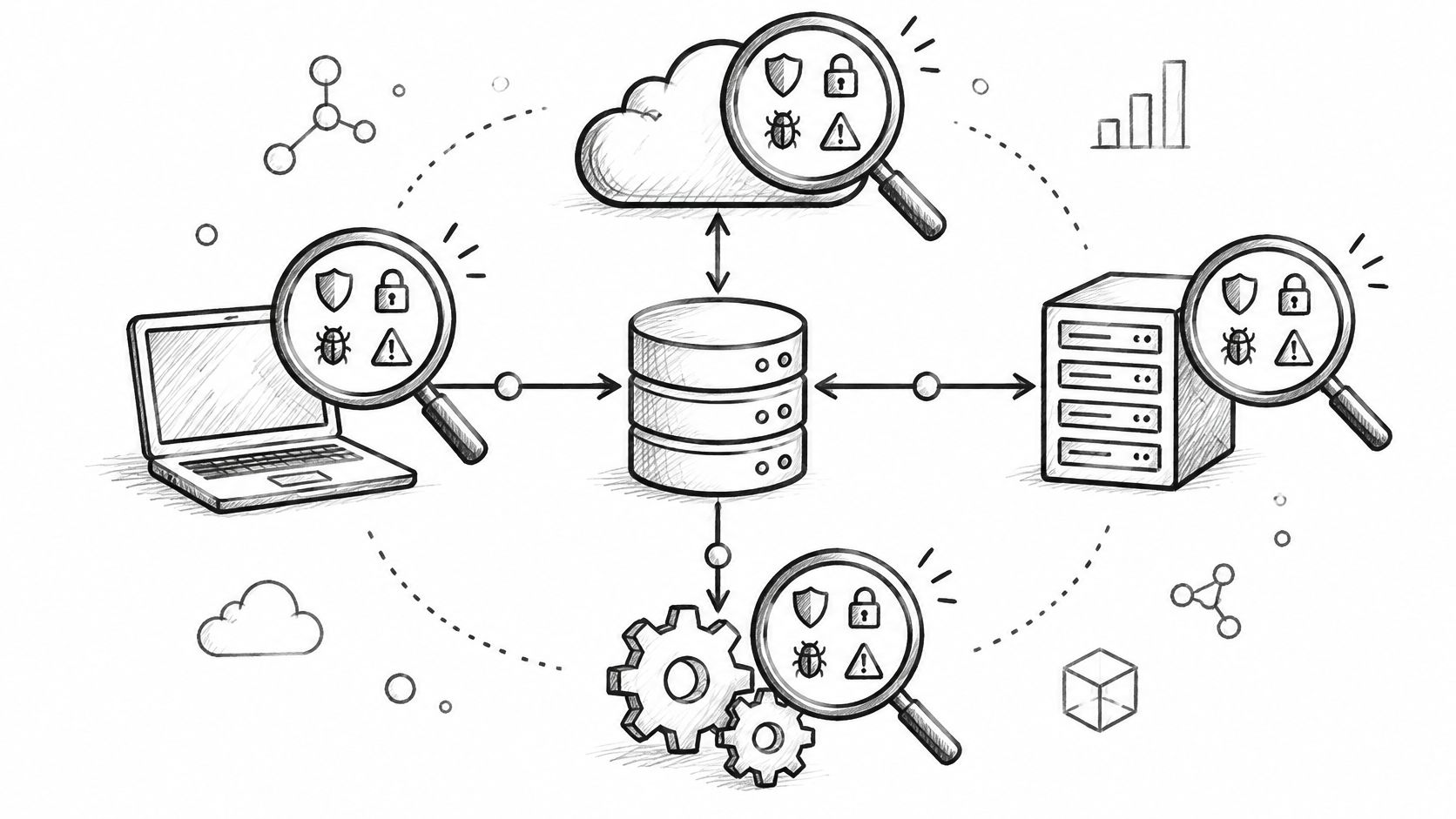
Start with the refund API. Draw its data flow diagram first, with the caller, API gateway, service, database, payment provider, and every trust boundary between them. Then test each element against Spoofing, Tampering, Repudiation, Information Disclosure, Denial of Service, and Elevation of Privilege. You're not brainstorming in the abstract. You're asking, for this arrow crossing this boundary, which category applies.
Turning Threats Into Reviewable Work
For a payment flow, spoofing becomes API caller authentication, tampering becomes signed transaction amounts, and repudiation becomes an immutable audit record. A health data platform applies the same pass to patient record APIs, checking authorization on each record access and logging who viewed what. Each threat gets an owner, a mitigation, and a link to the ticket or design record that will prove it shipped.
Microsoft's lifecycle shows why this can't stay a workshop exercise. Microsoft's Security Development Lifecycle) reports that software subjected to the SDL experienced a significantly lower rate of vulnerabilities discovered externally than software not subjected to it. Teams there threat model at component level during design, then carry countermeasures into static analysis, code review, and testing.
- Re-run on change: A new integration, data store, or external dependency invalidates the old diagram, so regenerate it.
- Link every threat: Use STRIDE threat modeling guidance to tie each mitigation to a pull request check.
- Measure completion: Track components modeled and threats with approved mitigations, not meetings held.
The trade-off is time up front. I'd accept it, because unmodeled boundaries are where refund fraud and record leakage hide.
2. LINDDUN Privacy Threat Modeling
STRIDE asks whether an attacker can get in. LINDDUN asks a different question. Can the system itself expose people through Linking, Identifying, Non-repudiation, Detecting, Data disclosure, Unawareness and unintervenability, and Non-compliance, even when it works exactly as designed?
Apply it to the same data flow diagram, but follow personal data rather than attack paths. A digital health app, for example, checks whether a patient identifier stays linkable as it passes from intake to analytics to a support tool. If three services can join records on one ID, you've built a re-identification risk without any vulnerability.
Where Privacy Decisions Get Enforced
Media platforms run LINDDUN over recommendation systems to catch profiling users aren't aware of and can't intervene in. FinTech teams use it on onboarding flows to question retention periods and disclosures to verification vendors. In each case, the output isn't a privacy opinion. It's a decision like tokenize identifiers before analytics, delete documents after verification, or require explicit consent before profiling.
Apply LINDDUN only to features that process personal or health data. Running it on every change dilutes the review until reviewers stop taking it seriously.
Pair the privacy pass with a STRIDE pass on the same diagram, since one rarely covers the other. Record the outcome in an architecture decision record with the data categories, retention rule, and legal basis attached, then enforce retention and consent flags in code review and pipeline checks. Involve privacy or compliance stakeholders at design stage, not after the schema ships. Retrofitting unlinkability into a live data warehouse costs far more than choosing tokenization before the first table exists.
3. Zero Trust Architecture
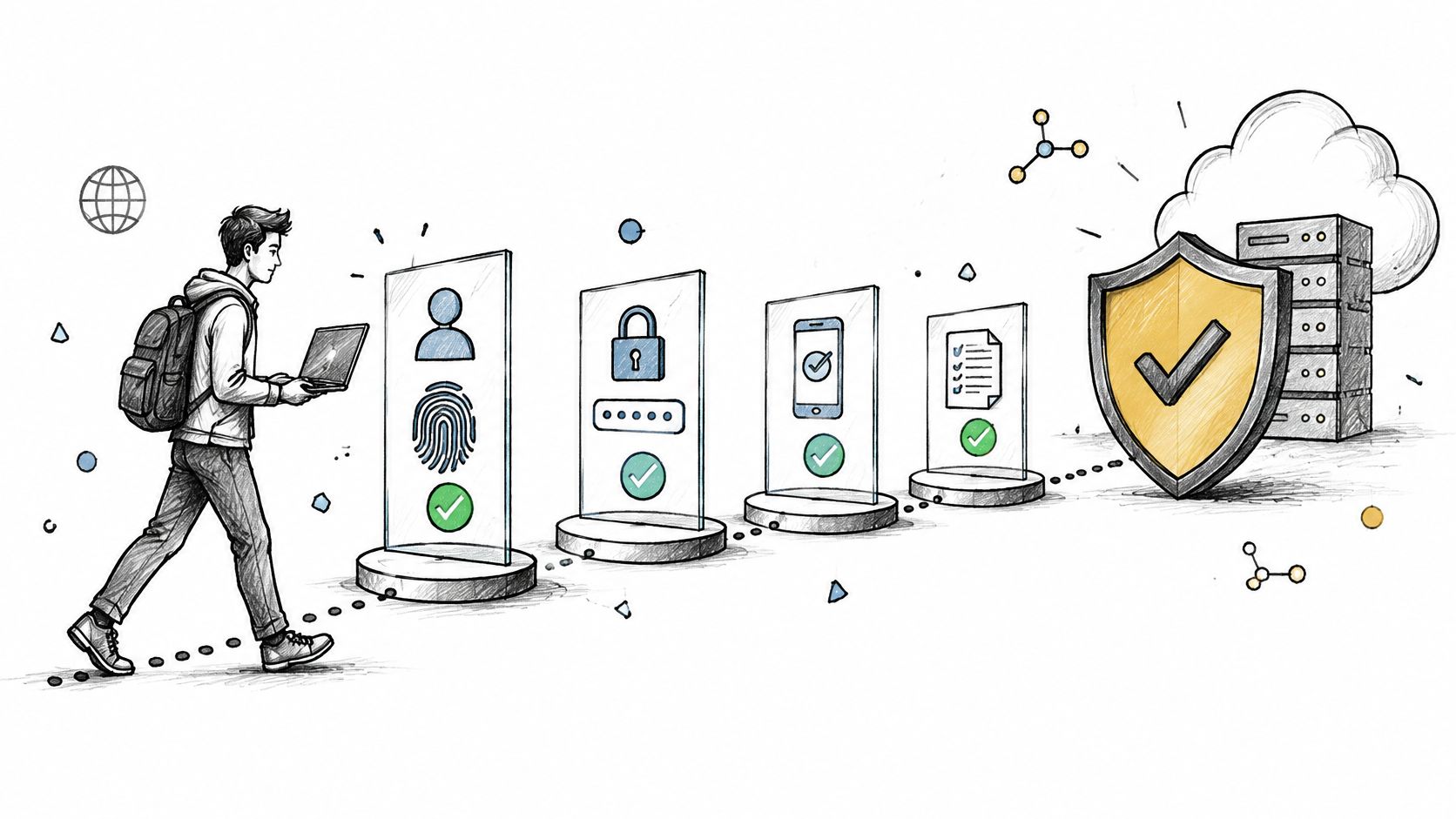
Zero trust removes the assumption that anything inside your network is safe. Under NIST SP 800-207, every request is authenticated, authorized, and evaluated on identity, device posture, and context, whether it comes from the internet or the next rack. For software teams, that means each service verifies its caller directly instead of inheriting trust from a perimeter.
Google's BeyondCorp is the reference case, moving internal applications to identity and device based access without a network VPN. Banks implement the same idea at service level with mutual TLS and identity-aware proxies between internal APIs. US federal agencies have adopted comparable strategies aligned to the NIST model.
Making the Pattern Merge-Blocking
The design work is naming your policy decision points. A reviewer should be able to point to the component that decides access for each service call and the identity it checks. Use short-lived credentials and workload identities for service-to-service calls, so a leaked token expires before it's useful. Then encode those expectations as pipeline checks that flag new services without authentication middleware or with long-lived static keys.
Start with one high-value application, such as a payments admin console, and expand incrementally. Trying to convert every service at once stalls. Operating costs still need planning, much like the discipline in Field Service budgeting for UK businesses, where staged rollout beats a big bang. The trade-off is more identity infrastructure to run. You gain a design where one compromised internal service doesn't hand an attacker the whole estate.
4. Policy-as-Code Enforcement in Pull Requests
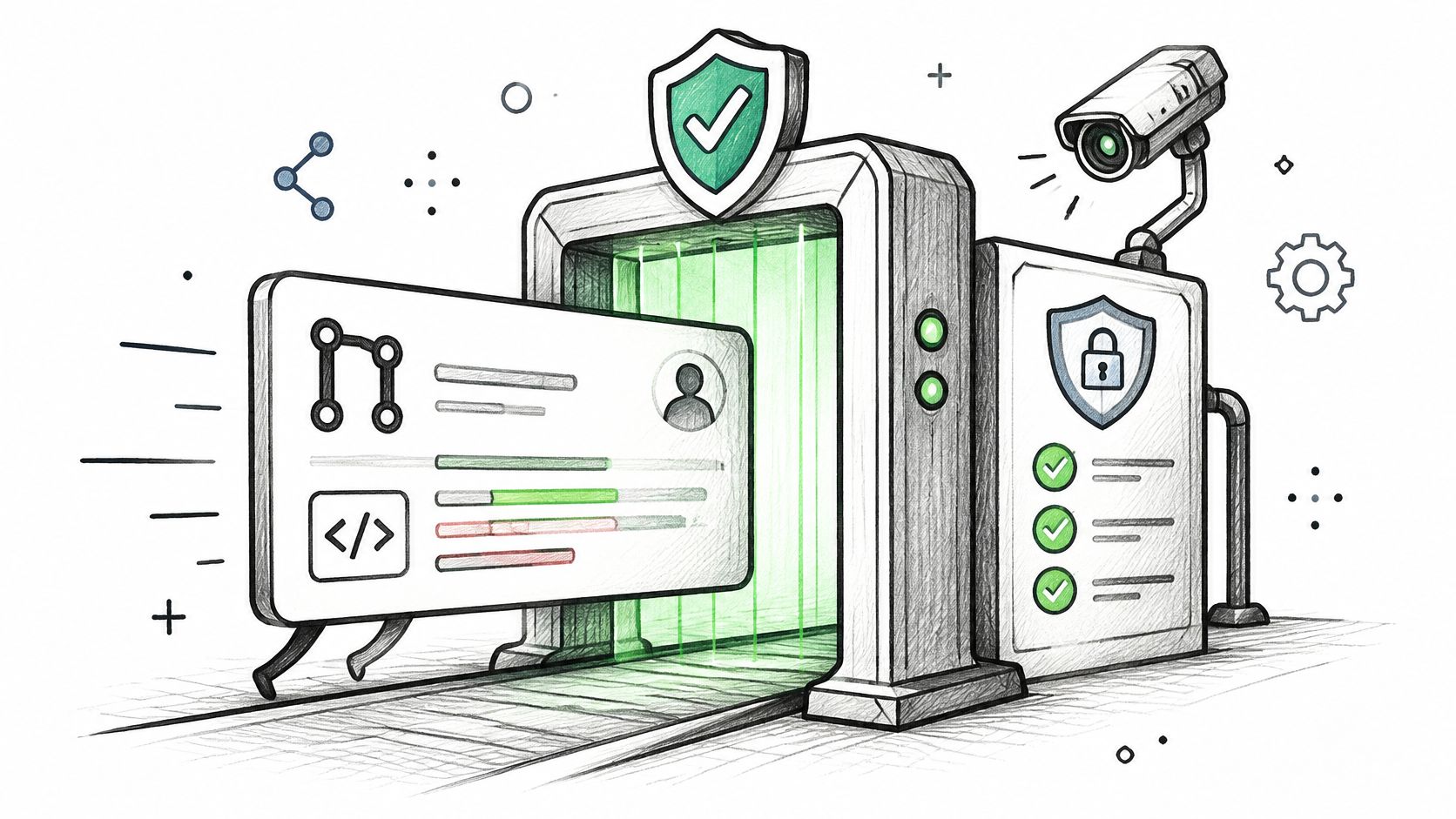
Every pattern in this list fails the same way if it stays as prose. Policy-as-code fixes that by expressing security rules as machine-readable checks evaluated on pull requests and deployments. A written standard becomes versioned, testable, and capable of blocking a merge.
Open Policy Agent in Kubernetes admission control is the common example, rejecting deployments that violate security policy before they run. Infrastructure teams use HashiCorp Sentinel to check Terraform plans before apply. At design level, a FinTech team can block merges when a service handling regulated data lacks an approved threat model link.
Extending Policies to the Build System
Don't stop at application code. Red Hat's 2025 product security risk report counted 137 publicly reported software supply-chain attacks in 2025, a 54% year-over-year increase. Model trust boundaries around repositories, package sources, CI runners, signing, and deployment credentials, then write policies that flag silent expansions of trusted inputs or workflow permissions. Dependency scanning alone won't catch a malicious build plugin.
- Start small: Pick a few high-impact rules from policy-as-code examples and expand gradually.
- Warn before blocking: Run new policies in audit mode until teams trust the signal.
- Expire exceptions: Every waiver needs an owner and an end date.
Link each policy back to the approved decision it enforces. That trace is what an auditor wants.
5. Defense in Depth
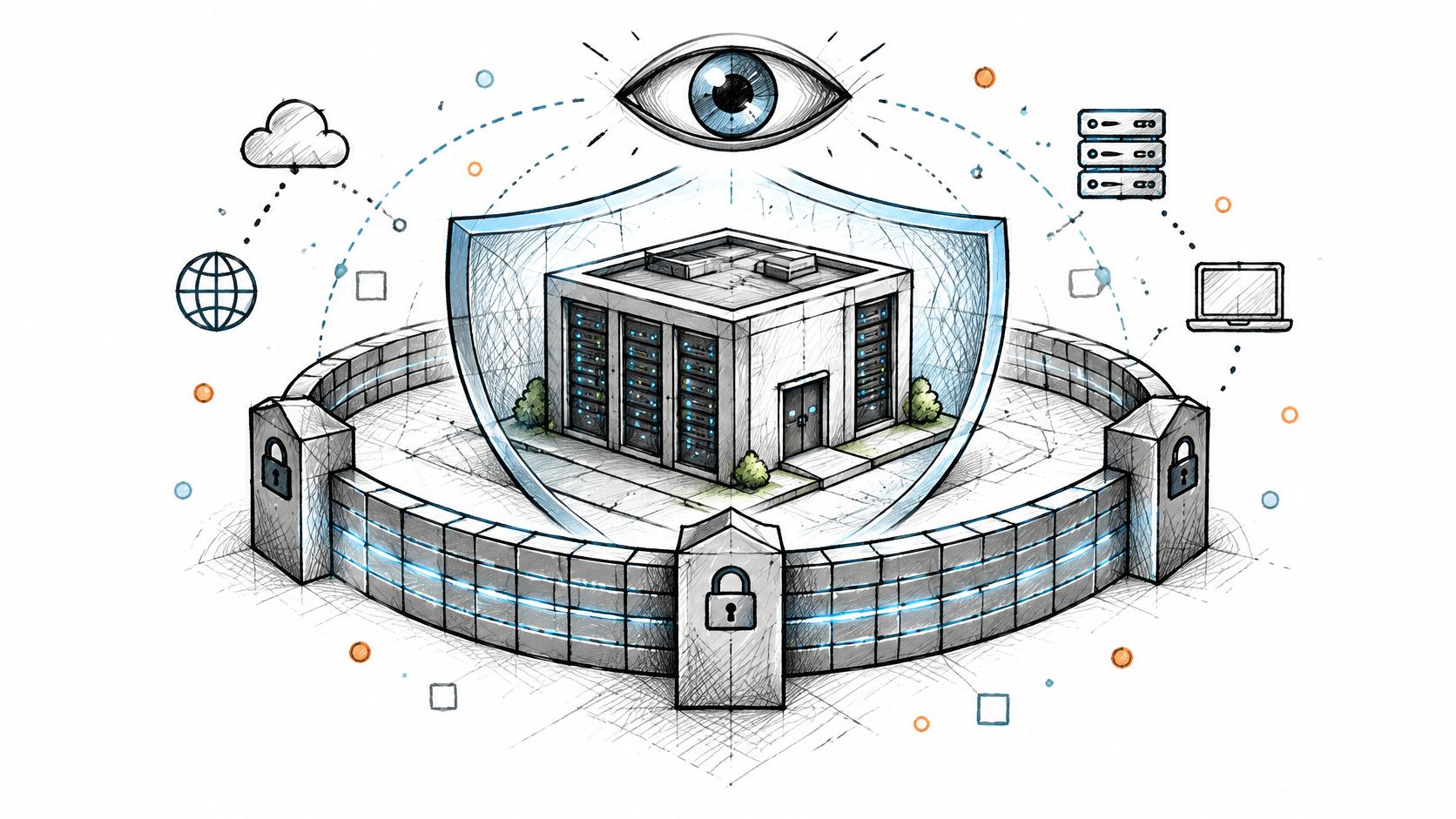
Assume one control will fail, because eventually one does. Defense in depth layers independent controls so failure at one layer doesn't expose the asset. The key word is independent. Two checks that share the same config file aren't two layers.
A payment system combines network segmentation, tokenization, encryption, and fraud monitoring, so a stolen database yields tokens instead of card numbers. A healthcare platform layers identity verification, field-level encryption, and audit logging around patient records. Media platforms stack a web application firewall, rate limiting, input validation, and content authorization in front of publishing endpoints.
Why Layers Beat Patch Speed
Remediation data shows why you can't rely on fixing fast. Verizon's 2025 breach study summary found organizations fully remediated only about 54% of perimeter-device vulnerabilities during the year, with a median time of 32 days. During that window, segmentation, least privilege, and monitoring are what stand between a known flaw and a breach. Design determines whether mitigation is a config change or an emergency rebuild.
Map each critical asset to at least two independent controls and document each layer's failure mode in the architecture record. Use threat model output to decide where another layer is justified instead of layering everywhere equally. Test with tabletop exercises or controlled attack simulations, because untested layers often fail together. I'd rather fund a second control on the payment path than a fifth scanner.
6. Least Privilege with Role- and Attribute-Based Access Control
Least privilege sounds simple until you design it. Every user, service, and process gets only the permissions its function needs, implemented through role-based access control (RBAC) or attribute-based access control (ABAC) scoped to specific resources and actions. The design decision is the permission matrix, written before implementation, not discovered from production logs later.
Cloud teams scope IAM policies to named resources and verbs. Kubernetes RBAC restricts service accounts to required namespaces. Banks enforce separation of duties so the person who initiates a transaction can't approve it, a control that also helps limit employee-related cybersecurity risks because no single insider holds the full path.
Keeping Permissions From Drifting
Permissions only ever grow unless you design against it. These practices keep the chain intact from decision to deployment.
- Define access in the design doc: List each role, its resources, and its actions before code review begins.
- Automate access reviews: Remove unused permissions on a schedule, not after an incident.
- Use just-in-time elevation: Grant administrative access as short-lived tokens tied to a ticket.
- Enforce in the pipeline: Policy checks reject infrastructure changes that widen permissions beyond the approved matrix.
ABAC adds flexibility for context like device or location, but it also adds policy complexity that's harder to review. Choose RBAC when roles are stable and ABAC when context changes decisions. A health platform, for instance, can allow record access by role but restrict bulk export by attribute, such as care team membership. That distinction belongs in the threat model, not in a support ticket.
7. Secure-by-Default and Fail-Secure Design
Misconfiguration beats clever attacks as a breach cause in cloud and API systems. Secure-by-default design means the system starts in its most protected configuration, and someone must act deliberately to weaken it. Fail-secure design means a broken component denies access rather than opening up.
Cloud storage that blocks public access by default is the familiar case. More important for design reviews is the API gateway that denies requests when the authorization service is unreachable, instead of letting traffic through while it retries. Health data systems apply the same logic by requiring an explicit consent flag before any external sharing occurs.
Deciding What Failure Looks Like
Not everything should fail closed. A media platform might serve cached public content during an auth outage while still denying publishing actions. The mistake is leaving that choice to chance.
Design rule: For every dependency failure, write down whether the system fails open or closed, and why. If nobody decided, the default library behavior decided for you.
This is where measurement helps. NIST's cloud-infrastructure threat-modeling study modeled architecture with attack-surface analysis, attack trees, and attack graphs, then ran hardening exercises to verify controls broke real attack paths. Borrow that approach. Test deny-by-default behavior in failure scenarios, set secure defaults in shared libraries and templates, and track every exception with an owner and review date. Guidance on security by default covers turning these defaults into enforceable standards.
8. Architecture Decision Records for Security Decisions
Six months after launch, someone asks why the API uses token exchange instead of API keys. Without a record, the team argues from memory. An architecture decision record (ADR) prevents that. It's a short document capturing one decision, its context, the options considered, and its consequences.
Engineering organizations store ADRs in the repository beside the code they govern. FinTech teams record encryption key management choices with their compliance rationale. Media platforms document data retention and content moderation architecture the same way. Because the ADR lives in version control, it becomes part of the review trace rather than a file on someone's drive.
Reconstructing a Decision From Repository Artifacts
Say documentation is thin and you inherit a payments service. You can rebuild the chain from artifacts. The Terraform shows a private subnet and a KMS key policy, the CI workflow shows a signing step, and merged pull requests show reviewers citing a threat about key misuse. From those, you draft the missing ADR, link it to the threat model, and convert the key policy expectations into a pipeline check. Now the reconstructed decision is enforceable going forward.
That reconstruction matters because design context is usually incomplete. GitLab and Omdia's 2024 survey of more than 5,000 professionals found only 1 in 5 organizations reported using a software bill of materials to document components. Keep ADRs short, write them before implementation, and include threats considered plus residual risk. Link each one to its threat model and policy rules, then review status quarterly so superseded decisions get marked instead of contradicted.
How each security design pattern is modeled, enforced, and audited
| Item | Threat Model Method | Typical Sector Fit | Enforcement Point | Audit Artifact |
|---|---|---|---|---|
| STRIDE Threat Modeling | Six-category analysis of data-flow diagram elements | Financial services, healthcare, general software | Design reviews and threat backlog | Threat list linked to tickets or design documents |
| LINDDUN Privacy Threat Modeling | Seven-category privacy analysis of data flows | HealthTech, FinTech, media platforms | Privacy-focused design reviews | Privacy decisions recorded in architecture decision records |
| Zero Trust Architecture | Continuous identity-, device-, and context-based verification | Finance, healthcare, government, remote-work environments | Policy enforcement points on each access request | Access-decision logs and documented policy decision points |
| Policy-as-Code Enforcement in Pull Requests | Machine-readable policies evaluated automatically | FinTech, infrastructure, regulated software teams | Pull-request checks and CI or deployment pipelines | Versioned policy results, review outcomes, and exceptions |
| Defense in Depth | Multiple independent, overlapping security controls | Payment systems, healthcare, media platforms | Network, identity, application, and data layers | Architecture documentation of controls and failure modes |
| Least Privilege with Role- and Attribute-Based Access Control | RBAC or ABAC permissions scoped to resources and actions | Cloud platforms, Kubernetes, banking | IAM systems and infrastructure policy checks | Access policies and periodic access-review records |
| Secure-by-Default and Fail-Secure Design | Secure defaults, deny-by-default rules, and closed failure behavior | Cloud services, APIs, health data systems | Shared configurations, gateways, and failure handling | Tests and records of approved exceptions |
| Architecture Decision Records for Security Decisions | Documented context, options, decisions, and consequences | Engineering teams across regulated and general sectors | Version-controlled design and change reviews | Security ADRs linked to threat models and policies |
Turning Design Examples into Enforced Controls
Pick one security design example your team already uses. It might be a STRIDE review on a payment flow or an ADR covering encryption key management. Put its threat model, decision record, and policy in the same repository, then enforce that link at pull request review. A pattern only protects you once a merge can be blocked by it and an auditor can trace it back to an approved decision.
That enforcement now has to cover AI-generated changes too. Stack Overflow's 2025 developer survey, reported by Fortune, found 84% of developers use AI coding tools and 51% use them daily, while 61.7% reported ethical or security concerns about AI-generated code. The risk is concrete. Veracode's GenAI Code Security Report found 45% of code samples generated by large language models contained vulnerabilities aligned with the OWASP Top 10 in 2025.
Where to Start This Quarter
Those numbers change what design review is for. When an agent writes the code, the review's job is to constrain intent before generation and verify the result against the original decision. Translate each approved decision into machine-checkable constraints, such as allowed data flows, permission ceilings, and banned dependency patterns. Then check the generated diff against those constraints automatically, with a documented override process for exceptions.
Time pressure is the usual objection, and it's real. The Linux Foundation and OpenSSF reported that 58% of organizations identified lack of time as their leading challenge to secure software development in 2024. That's an argument for embedding checks in existing pull request flow, not for more review meetings. Sector stakes differ, but the chain doesn't. FinTech teams trace decisions to transaction controls, HealthTech teams to consent and record access, and media platforms to publishing and profiling risks.
Measure whether it's working with review latency, policy violation rates, override rates, and the share of changes carrying auditable security evidence. A Cloudsmith survey found 42% of developers said their codebases were predominantly populated with AI-generated code, while only 67% said they review code before deployment. Automated design enforcement closes that review gap with evidence instead of hope. Platforms such as DevArmor support this model by generating threat models from tickets and repositories and enforcing approved decisions on pull requests. Start with one service, one decision, and one blocking check. Expand only after that chain holds under a real audit question.
DevArmor keeps a living security context from design through deployment, with continuous threat modeling from your tickets and repositories, in-workflow design reviews, and policy-as-code checks that can block merges when code drifts from an approved decision. If your team ships AI-assisted changes in FinTech, HealthTech, or media and needs audit-ready evidence without extra review meetings, visit DevArmor to see how it fits your existing GitHub, Jira, and IDE workflows.
Table of Contents
Subscribe


